विशेष लेख
What are the characteristics of the latest plum blossom
Plum blossom refers to a flowering tree belonging to the genus Prunus in the Rosaceae family. In some contexts, the term may also describe the fruit (plum) or the flower itself (plum blossom). It typically blooms during late winter and early spring and is traditionally recognized as one of the “Four Gentlemen” alongside orchid, bamboo, and chrysanthemum.
Jamie Parker
लेखक
लेख परिचय
नीचे पूरा लेख पढ़ें।
अनुभाग
समाचार
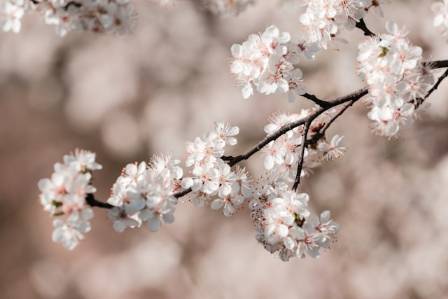
Plum blossom refers to a flowering tree belonging to the genus Prunus in the Rosaceae family. In some contexts, the term may also describe the fruit (plum) or the flower itself (plum blossom). It typically blooms during late winter and early spring and is traditionally recognized as one of the “Four Gentlemen” alongside orchid, bamboo, and chrysanthemum.
It is also grouped among the “Three Friends of Winter” with pine and bamboo. Because of its strong cold resistance and early blooming nature, it has long been regarded as a symbol of winter. The following sections describe its main characteristics.
Appearance Features of Plum Blossom
The plum blossom is usually a small tree or a sparsely branched shrub, generally reaching 4–10 meters in height. Its bark is gray or greenish, while young branches are green. The leaves are oval or elliptical in shape, with a pointed tip. The base of the leaf is rounded to wedge-shaped, and the edges are sharply serrated.
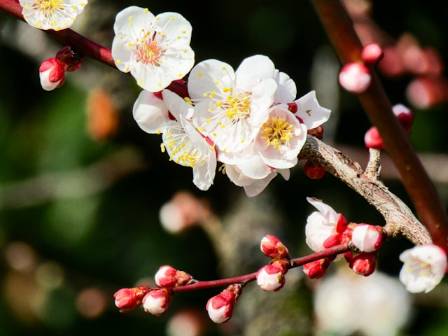
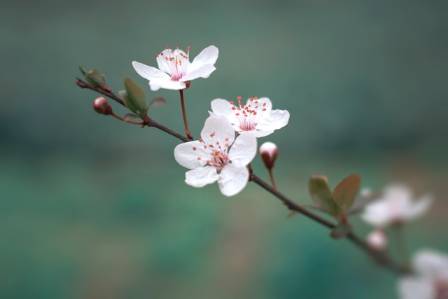
The flowers may appear singly or in pairs within one bud. They are fragrant and usually open before the leaves emerge. Flower stalks are short. The calyx is typically reddish-brown, with a bell-shaped tube. Sepals are oval or nearly round, and petals are obovate, ranging in color from white to pink.
The fruit is almost spherical and has a sour taste. The flesh adheres closely to the stone, which is oval in shape. Flowering occurs mainly in winter and spring, while fruiting takes place from May to June, sometimes extending to July or August in northern regions.
Growth Characteristics of Plum Blossom
Plum blossom prefers a relatively warm climate and is not extremely cold-hardy. Except for certain hardy varieties such as apricot plum types, which can tolerate temperatures around −25°C, most varieties can only withstand about −10°C. It is drought-tolerant but does not do well in waterlogged soil. The tree can live for a very long time, sometimes reaching up to a thousand years.
Flowering is highly sensitive to environmental conditions. It prefers humid air but cannot tolerate heavy rainfall during blooming. It can also withstand high temperatures up to around 40°C, and grows best in regions where the annual average temperature is between 16°C and 23°C.
Temperature changes strongly affect flowering time. Blooming begins when early spring temperatures rise to around −5°C to 7°C. If temperatures are lower than expected, flowering is delayed; if conditions remain cool, the flowering period may be extended.
Spiritual and Cultural Meaning of Plum Blossom
Plum blossoms are among the first flowers to bloom in the cold of winter, often before other plants begin to flower. Because of this early blooming nature, they have been widely admired by poets and scholars throughout history.
Song dynasty writer Chen Liang once described the plum blossom as “the first to open, bringing fragrance to all later flowers,” highlighting its pioneering spirit and resilience. This imagery is often interpreted as a reflection of courage, independence, and the willingness to lead despite challenges.
Wang Anshi’s poem describes how the plum blossom can be recognized from afar by its fragrance even when mistaken for snow, emphasizing its purity and elegance. Lu You, in his famous work “Ode to the Plum Blossom,” uses the image of petals returning to dust while retaining their fragrance to symbolize enduring integrity even in hardship. Yuan dynasty painter-poet Wang Mian also expressed admiration for the plum blossom, emphasizing its pure fragrance over external beauty, using it as a metaphor for moral strength and refusal to compromise.
Beyond literature, the plum blossom is also seen as a symbol of perseverance and resilience. It blooms bravely in harsh winter conditions, representing the spirit of enduring hardship and facing adversity with strength. It is admired for its ability to flourish in difficult environments while maintaining beauty and fragrance.
In traditional culture, the plum blossom is valued not only for its aesthetic appeal but also for its symbolic meaning of optimism, renewal, and hope. It does not compete with other flowers in spring, instead standing quietly and independently in winter, embodying a noble and dignified character that has been celebrated for centuries.
यह भी पढ़ें

सिएटल स्पेस नीडल के बारे में 12 हैरान करने वाले फैक्ट्स
पार्थ

अल्पाका ऊन बनाम भेड़ की ऊन: क्या अंतर है?
चैताली

सिल्क रोड के किनारे सबसे खूबसूरत झीलें और घास के मैदान
तनिष्क

A Concise Manual for Coordinating Sneakers with Every Ensemble
Dorian Blackwood

अगर आपको शांति और आराम की ज़रूरत है, तो 11 बेहतरीन जगहें
ऋषभ

परिवहन में शीर्ष 10 नवाचार
कृष्ण