विशेष लेख
Identifying Celestial Objects: A Guide to Space Rocks
The journey through our solar system is paved with rocky debris. From asteroids and comets to Kuiper Belt Objects, a vast array of small bodies composed of metal, ice, and stone are in perpetual motion around the Sun. Distinguishing between these objects can be confusing, yet they are of immense interest to researchers. These miniature worlds serve as profound scientific resources, potentially harboring the secrets to the origins of our planetary system.
Thaddeus Cole
लेखक
लेख परिचय
नीचे पूरा लेख पढ़ें।
अनुभाग
समाचार

The journey through our solar system is paved with rocky debris. From asteroids and comets to Kuiper Belt Objects, a vast array of small bodies composed of metal, ice, and stone are in perpetual motion around the Sun. Distinguishing between these objects can be confusing, yet they are of immense interest to researchers. These miniature worlds serve as profound scientific resources, potentially harboring the secrets to the origins of our planetary system.
Asteroids
Asteroids are rocky, airless fragments that orbit the Sun. These remnants from the birth of our solar system vary significantly in scale, ranging from the size of a small vehicle to the width of a major metropolis. Their compositions are equally diverse; while some are metallic, others contain high levels of carbon, giving them a dark, charcoal-like appearance. Some function as "rubble piles" held together by weak gravity, while others are solid, singular masses.
The majority of these objects are found within the main asteroid belt, a massive ring located between the orbits of Mars and Jupiter. While this region contains millions of asteroids, the distance between individual bodies is immense. Some asteroids follow paths that bring them into Earth's vicinity; these are classified as Near-Earth Objects (NEOs). Scientists track these objects using global telescopes to predict their trajectories and assess any potential impact risks. For researchers, asteroids act as vacuum-sealed time capsules, preserving the chemistry of the early solar system.
Comets
While comets also circle the Sun, they are more akin to "dirty snowballs" than solid rocks. Each comet possesses a central nucleus made of rock, dust, and frozen gases. As a comet's path nears the Sun, it warms up, releasing gases and dust that create a glowing atmosphere called a coma. This process also generates two distinct tails—one composed of dust and the other of ionized gas—which always point away from the Sun due to the solar wind.
There are billions of estimated comets, though only a few thousand have been officially confirmed. Like asteroids, they are ancient leftovers from roughly 4.6 billion years ago. Scientists believe that early comet impacts may have been responsible for delivering water and essential chemical building blocks to the young Earth.
Meteoroids
Meteoroids represent the smaller fragments of the solar system. These bits of debris typically result from collisions between larger bodies such as asteroids, comets, or even planets. They are essentially the shrapnel of deep space, and we primarily become aware of their presence when they interact with our planet's atmosphere.
Meteors
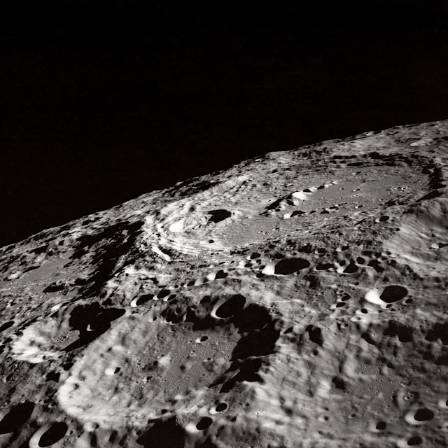
When a meteoroid enters the Earth's atmosphere at high velocity, it is classified as a meteor. The intense friction and pressure cause the object to heat up and glow, creating a brilliant streak of light often referred to as a "shooting star." While most meteors are destroyed by heat before reaching the surface, scientists estimate that nearly 50 tons of meteoritic dust and fragments fall toward Earth every single day.
Meteor Showers
On a typical clear night, observant stargazers might see a few random meteors. However, the frequency of these lights increases dramatically during a meteor shower. These events occur when Earth's orbital path intersects a trail of debris left behind by a comet. Because Earth passes through these specific patches of debris at the same time every year, meteor showers are predictable annual events that allow enthusiasts to witness hundreds of bright streaks.
Meteorites
If any part of a meteoroid or asteroid manages to survive its fiery descent through the atmosphere and strikes the ground, it is called a meteorite. Most recovered samples are roughly the size of a pebble or a fist, though much larger specimens exist. While massive impacts were common in Earth's early history, modern instances of meteorites causing significant damage or human injury are extremely rare.
Dwarf Planets
Dwarf planets are fascinating worlds that bridge the gap between small space rocks and major planets. To be classified as a dwarf planet, a body must be massive enough for its own gravity to pull it into a spherical shape. However, unlike the eight primary planets, dwarf planets do not have enough gravitational influence to clear their orbital paths of other debris. Pluto is the most famous example, found in the distant Kuiper Belt, while Ceres is the largest object in the asteroid belt.
Kuiper Belt Objects
Beyond the orbit of Neptune lies the Kuiper Belt, a vast, disc-shaped graveyard of icy bodies. This region extends from 30 to 55 times the distance between Earth and the Sun. It is home to hundreds of thousands of frozen worlds and perhaps a trillion comets. Notable inhabitants of this cold frontier include the dwarf planets Eris, Haumea, and Makemake. These objects are considered extremely pristine time capsules because of the freezing temperatures in which they reside.
Oort Cloud Objects
The Oort Cloud is the most distant and mysterious region of our solar system. It is envisioned as a giant, spherical bubble of icy debris that completely surrounds the Sun and the inner planets. This region is so far away that it takes light hours to reach it, and spacecraft like Voyager 1 will take centuries just to arrive at its inner edge. The Oort Cloud is the source of long-period comets that take thousands or even millions of years to complete a single trip around the Sun.
Robotic Explorers
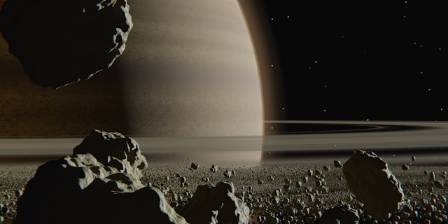
While many of these regions are incredibly far away, humanity has sent robotic emissaries to study these small worlds up close. These spacecraft act as our eyes in the dark, collecting data and even physical samples. Notable recent efforts include the OSIRIS-REx mission, which returned samples from asteroid Bennu, and New Horizons, which provided our first close-up look at Pluto and the distant object Arrokoth. Other missions, such as Lucy and Psyche, are currently on their way to investigate different populations of asteroids to help us piece together the history of our cosmic neighborhood.
यह भी पढ़ें

7 सबसे प्रतिष्ठित क्लासिक कारें
प्रकाश

स्ट्रॉबेरी टॉप्स के 10 हैरान करने वाले, बिना वेस्ट किए इस्तेमाल
पूजा

The 10 Best Supercars For 2026
Evander Cole

3 Great Environmental Benefits Of Cycling
Sandra Walker

जलमग्नता में महारत हासिल करना: जलमग्न कला के लिए एक व्यापक मार्गदर्शिका
सूरज मण्डोवाल

मीठे पानी के चमत्कार - 10 भयानक जानवर जो झीलों में रहते हैं
विहान