विशेष लेख
5 Best Classic Pickup Trucks of All Time
It would be difficult to imagine anything more deeply tied to American culture than the traditional pickup truck. For generations, these vehicles have been essential to the country’s growth and daily life. They continue to work alongside people on farms, construction sites, and as dependable personal transportation.
Sophia Wells
लेखक
लेख परिचय
नीचे पूरा लेख पढ़ें।
अनुभाग
समाचार
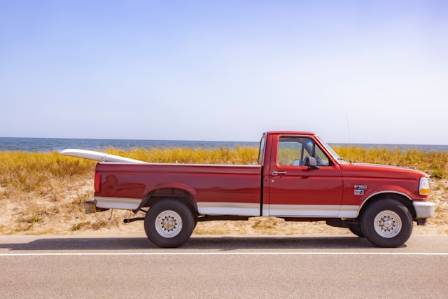
It would be difficult to imagine anything more deeply tied to American culture than the traditional pickup truck. For generations, these vehicles have been essential to the country’s growth and daily life. They continue to work alongside people on farms, construction sites, and as dependable personal transportation.
The Ford F-Series has held the title of America’s best-selling vehicle for over 30 years, and it continues to dominate the market. This long-running success reflects how strongly Americans value their trusted workhorses.
While modern pickups offer more horsepower, improved towing strength, and added comfort features, it is the classic trucks of earlier decades that truly capture enthusiasts’ emotions. Today, vintage pickups are becoming highly sought-after collectibles. They are relatively affordable, supported by strong parts availability, mechanically straightforward, and visually appealing in a timeless way.
Below are five of the most admired classic pickup trucks, presented in no specific order, each with its own unique character and legacy.
The second-generation Ford F-Series, especially the 1953–1956 Ford F-100, stands out as one of the most recognizable classic trucks. Models like the F-250 and F-350 from the same period are also highly respected. The final year of the flathead engine appeared in the 1953 F-100 before Ford introduced the overhead-valve Y-block V8 in 1954. A full breakdown of all 14 F-Series generations is available through AutoWeek.
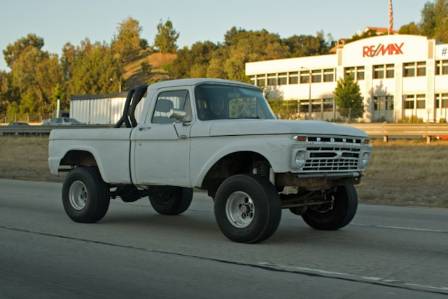
The F-100 is often the first image that comes to mind when thinking of a classic pickup. Restored examples are real attention-grabbers. Their bold front grille design became a symbol of durability and craftsmanship, while the wide, sculpted fenders add to their vintage appeal. Collectors are increasingly interested in these trucks, and many believe values are still rising, making them a strong candidate for future appreciation.
The second-generation Chevrolet C/K series, particularly the 1967–1972 models, is widely considered the most desirable era of this lineup. While the earlier 1960–1967 trucks are still respected, the later generation introduced a more squared-off, modern shape that has become extremely popular among collectors.
These trucks are appreciated for their versatility. Owners often restore them to factory condition or modify them heavily, and both approaches look equally impressive. Many are still used as daily drivers thanks to their reputation for durability.
In this lineup, “C” designates rear-wheel drive while “K” represents four-wheel drive. In many southern regions, the C-series is especially popular. Compared to many collector vehicles, these Chevrolets remain relatively affordable, and replacement parts are easy to source. Their simple mechanical layout also makes them accessible for maintenance and restoration. When properly built, they project a rugged, almost unstoppable presence. Resources like Hagerty provide detailed buyer guides for the 1967–1972 C/K series.
The 1978–1979 Dodge Li’l Red Express is one of the most unusual and performance-focused trucks of its era. At the time of its release, it was considered the quickest production vehicle available for 0–100 mph acceleration in 1978. Dodge installed a police-derived 360 cubic-inch V8 engine, then further enhanced it for performance.
With its bold styling—including exposed exhaust stacks, racing-inspired wheels, and distinctive graphics—the Li’l Red Express fully embraced a muscle-truck identity. It produced around 225 horsepower and 295 lb-ft of torque, and magazine tests recorded a quarter-mile time of approximately 15.7 seconds at 88 mph. Remarkably, it could outperform some sports cars like the Camaro Z28 in straight-line acceleration despite its weight.
Production numbers were limited, with roughly 2,000 units built in 1978 at around $7,000 each. The 1979 version received updates such as catalytic converters and revised headlights, with over 5,000 additional units produced. Automotive publications like MotorTrend have documented its legacy in detail.
The first-generation Ford F-Series, produced from 1948 to 1952 (notably the F-1), represents the foundation of Ford’s pickup legacy. Introduced after World War II, it marked Ford’s shift to a dedicated truck platform instead of using passenger-car-based designs. This generation helped establish the modern pickup formula and remained in production through the early 1950s.
Restored examples are often kept close to original factory condition, as their simplicity and historical significance are part of their charm. These trucks symbolize a transitional era in American history, reflecting post-war recovery and renewed industrial strength.
The Chevrolet Advance Design series, produced from 1947 to 1955, was Chevrolet’s answer to the post-war truck market. It replaced the earlier AK Series and introduced a larger, more refined, and more modern appearance for its time. These trucks remain among the most recognizable vintage pickups ever built.
For several years during this era, Chevrolet dominated U.S. truck sales, showing how well the Advance Design lineup resonated with buyers. Many collectors preserve them in original form, while others customize them extensively. Either approach highlights their strong visual foundation and cultural importance in American automotive history.
While other American pickups could easily be included in such a list, these five remain especially iconic among enthusiasts. Each represents a different era of design, engineering, and cultural meaning in the evolution of the American pickup truck.
For those interested in classic vehicle restoration and maintenance, staying connected with enthusiast communities, repair resources, and restoration guides can be extremely valuable.
यह भी पढ़ें

ट्रांग आन लैंडस्केप कॉम्प्लेक्स
कल्पना

प्राचीन कलाकृतियाँ आधुनिक वास्तुकला को कैसे प्रेरित कर सकती हैं
संजय

धीमी गति से जीना क्या है?
सुनीता

हाथियों के बारे में शीर्ष 10 तथ्य
आद्या

Skiing for Beginners: Your Complete Guide to Getting Started
Daniel Lewis

प्रसिद्ध पास्ता के आकार और उनकी कहानियाँ
रूद्र