A canyon (or gorge) is a deep ravine carved between escarpments or cliffs, most often shaped by river erosion over geological time; it can also refer to a rift between mountain peaks. Specialized types include box canyons (enclosed by mountains or with one open side) and slot canyons (narrow with smooth walls). Defining the “largest” canyon is imprecise, as size is measured by depth, length, or total system area: Arizona’s Grand Canyon (avg. depth 1,600m, volume 4.17 trillion m³) is iconic, but Mexico’s Copper Canyon is deeper and longer; Greenland’s under-ice Grand Canyon (discovered in 2013) is believed the longest. For depth, Tibet’s Yarlung Tsangpo Grand Canyon (5,500m) and Nepal’s Kali Gandaki Gorge (6,400m river-to-peak difference) are contenders, while the confluence of Pakistan’s Gilgit and Indus rivers reaches 7,120m—Earth’s deepest. This guide focuses on the world’s most traveler-famous canyons, celebrated for their beauty and accessibility.
Africa’s Iconic Canyons
Blyde River Canyon, South Africa
Located in Mpumalanga, forming the northern Drakensberg escarpment, Blyde River Canyon stretches 25km with an average depth of 750m (max 1,383m from Mariepskop Peak—1,944m above sea level—to the river’s exit at 561m). Carved from red sandstone and fed by the Blyderivierpoort Dam (665m altitude when full), it stands out as one of Earth’s largest canyons and possibly the biggest “green canyon,” draped in lush subtropical foliage that contrasts with arid canyon landscapes elsewhere.
Fish River Canyon, Namibia
Namibia’s Fish River Canyon is a colossal natural wonder—often debated as the world’s second-largest canyon—with a scale that defies description. Most visitors admire its unparalleled vistas from viewpoints near Hobas, but adventurous travelers can tackle the epic 5-day, 85km hike along the Fish River (north from Hobas to Ai-Ais), available only between May and September (dry, cooler season). Day hikes into the canyon are now forbidden following a fatal incident involving an unprepared visitor, but the multi-day trail remains a bucket-list experience for those seeking immersion in its vastness.
Asia’s Stunning Gorges
Charyn Canyon, Kazakhstan
Situated 200km east of Almaty, near the Kyrgyzstan-China border, Charyn Canyon stretches 80km along the Charyn River in the northern Tien Shan Mountains, part of Charyn National Park (established in 2004, covering 154km of the river in Almaty Province’s Uyghur and Kegen Districts). With depths ranging from 150 to 300m, its most famous section is the 2km-long “Valley of Castles,” named for its dramatic, unusual rock formations, and widths varying from 20 to 80m, creating a striking landscape of sculpted stone.
North America’s Legendary Canyons
Antelope Canyon, USA
A breathtaking slot canyon on Arizona’s Navajo Nation near Page, Antelope Canyon is carved by erosion that smoothed its sandstone walls into graceful, flowing curves. Split into two main sites—Upper and Lower Antelope Canyon—access is exclusive to guided tours (due to its Navajo Nation location), offering visitors a chance to marvel at how light filters through narrow openings, painting the walls in warm, shifting hues.
Bryce Canyon, USA
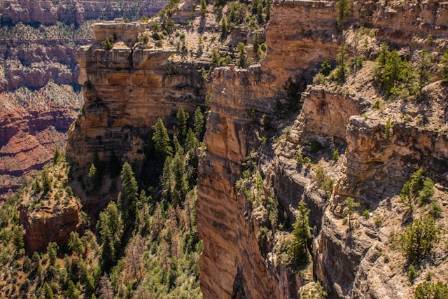
A highlight of Southwest US travel, Bryce Canyon (Utah) is renowned for its “hoodoos”—tall, thin spires carved from larger rock formations—that create a otherworldly landscape. Open year-round, it draws crowds from May to September (warm months), but winter visits offer tranquility with dustings of snow on hoodoos. The 18-mile Rim Road Scenic Drive (with east-side turnouts) showcases key viewpoints: Bryce Amphitheater (stretching from Bryce Point to Sunrise Point), Sunset Point, and Inspiration Point, each framing the hoodoos’ dramatic formations.
Copper Canyon (Barranca del Cobre), Mexico
In Mexico’s Chihuahua state, the Sierra Tarahumura’s Copper Canyon is a system of six interconnected canyons—collectively larger and deeper in parts than the Grand Canyon, though no single canyon surpasses it. Traversed by the Chihuahuahua Pacifico Railroad (“Chepe”), it is the traditional homeland of the Tarahumara people, famous for their ultra-long-distance running (up to 160km to hunt prey). The Tarahumara maintain a traditional lifestyle blended with Roman Catholic influences, adding cultural depth to the canyon’s natural grandeur.
Grand Canyon, USA
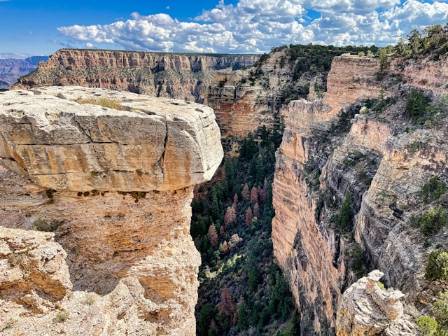
One of the world’s most visited landmarks (over 5 million annual visitors), the Grand Canyon was carved by the Colorado River and its tributaries through desert sandstone, spanning 443km long and 6.4–9.6km wide. Most lies within Arizona’s Grand Canyon National Park, with parts extending into Utah and Indian reservations. Estimated to be over 17 million years old, it cuts through 2 billion years of geological history, offering a profound glimpse into Earth’s past and unmatched panoramic views that captivate travelers globally.
South America’s Deepest Wonder
Colca Canyon, Peru
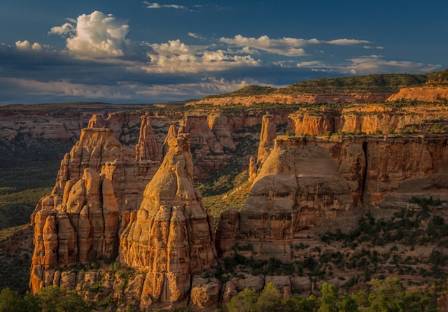
Located in southern Peru, Colca Canyon is often hailed as the world’s deepest canyon—twice as deep as the Grand Canyon—a claim easy to believe when standing on its precipices, 1km above the canyon floor. Driving from Chivay, the road winds alongside the canyon’s narrowing edges, offering unobstructed views of sheer cliffs. Beyond its vertiginous drops, the canyon’s most famous attraction is the condor viewpoint: perched on a spur, it overlooks the gorge where giant condors soar on thermal currents (heated by the sun-warmed canyon walls), sweeping past visitors at near-touching distance.