विशेष लेख
An introduction to the art technique Ink wash painting
Ink wash painting, known as “sumi-e” in Japan and “shui mo hua” in China, is an ancient art form with a rich legacy spanning over a millennium. It first emerged in China during the Tang Dynasty (618–907 AD), developing as a distinct artistic expression. Early practitioners drew inspiration from calligraphy, emphasizing the fluidity and emotive quality of brushwork.
Rowan James
लेखक
लेख परिचय
नीचे पूरा लेख पढ़ें।
अनुभाग
समाचार
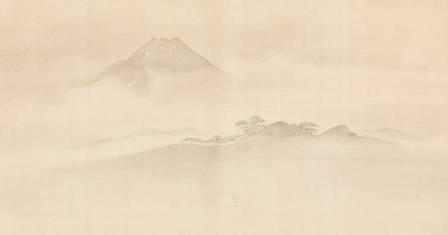
Ink wash painting, known as “sumi-e” in Japan and “shui mo hua” in China, is an ancient art form with a rich legacy spanning over a millennium. It first emerged in China during the Tang Dynasty (618–907 AD), developing as a distinct artistic expression. Early practitioners drew inspiration from calligraphy, emphasizing the fluidity and emotive quality of brushwork.
As the technique matured, it became a vehicle for conveying philosophical ideas, particularly those rooted in Daoism and Buddhism, which celebrated simplicity and harmony with the natural world. During the Song Dynasty (960–1279 AD), ink wash painting evolved to depict atmospheric landscapes, with artists exploring the subtle interaction of light and shadow.
Renowned painters such as Fan Kuan and Guo Xi became famous for their evocative portrayals of mountains and rivers, capturing both the grandeur and the mood of nature. Over successive dynasties, the art form incorporated new stylistic approaches while maintaining its philosophical core. By the 14th century, ink wash painting had reached Japan, where it influenced Japanese aesthetics and inspired unique interpretations like the Zen-influenced “sumi-e.”
Materials and Tools
The materials used in ink wash painting are central to its delicate, expressive quality. Traditional ink is made from soot mixed with water and a binding agent, typically ground on an ink stone with a brush. Artists can achieve a wide spectrum of greys and blacks by adjusting water levels. High-quality ink provides richer tones and depth, enhancing the final piece.
Brushes, usually made from animal hair such as goat, wolf, or rabbit, allow artists to execute both fine lines and broad washes. The resilience and flexibility of these brushes are crucial for expressive mark-making. Painting surfaces are generally rice paper or silk; rice paper is prized for its absorbency, which captures the fluidity of brushwork beautifully.
Techniques
Ink wash painting features methods that create its signature aesthetic.
Wet-on-wet: Applying wet ink to damp paper for soft, blended edges and a sense of depth.
Wet-on-dry: Applying wet ink to dry paper for sharp, defined lines.
Layering: Successive washes build tonal complexity, starting light and gradually adding darker shades.
Splattering/dripping: Creates texture and dynamism, often reflecting the artist’s emotional state.
Mastery of these techniques requires practice and a deep understanding of ink behavior on different surfaces.
The Role of Brushwork
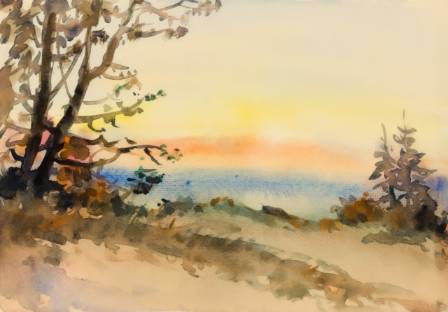
Brushwork is central to ink wash painting, both technically and expressively. Each stroke can convey mood, from serenity to turbulence. Gentle, sweeping strokes suggest calm, while quick, jagged lines convey energy or tension. This philosophy aligns with the idea that brushstrokes reflect the artist’s inner world.
Brush control is closely tied to Chinese calligraphy principles—balance, rhythm, and flow. Artists often train extensively in calligraphy to gain the precision and spontaneity needed to create compelling ink wash works. The tension between control and freedom in brushwork is what gives the art its vitality.
Common Subjects
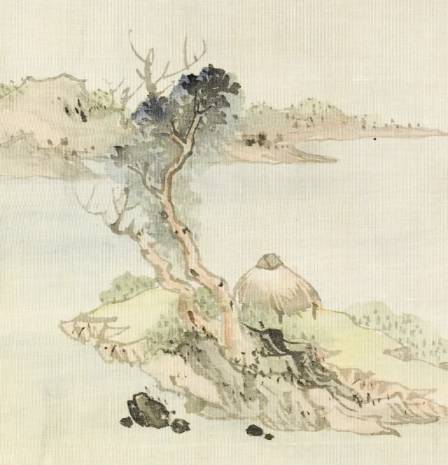
Traditional subjects often draw from nature, literature, or philosophy. Landscapes are especially prominent, with mountains, rivers, and trees symbolizing strength, endurance, and harmony. Flora, fauna, and mythical figures are also common, often carrying deeper symbolic meaning.
Human figures in contemplative poses or scenes illustrating moral lessons reflect spiritual and philosophical themes. The simplicity of these subjects encourages viewers to reflect and engage with the work on a personal level, which is part of the art form’s lasting appeal.
Notable Artists
Zhang Daqian (1899–1983): Famous for blending traditional techniques with modern influences, producing vibrant landscapes rich in movement and life.
Sesshū Tōyō (1420–1506): A Japanese monk-painter whose minimalist, Zen-inspired works, like “Winter Landscape,” emphasize simplicity and contemplation.
These artists exemplify the versatility and depth of ink wash painting, inspiring both traditional and contemporary practitioners.
Modern Uses
Today, ink wash painting is experiencing renewed interest. Contemporary artists often combine traditional methods with modern media or digital techniques, creating innovative works that resonate with today’s audiences while respecting the art form’s heritage.
Globally, educational programs now teach both classic and modern approaches to ink wash painting, helping students develop creativity, mindfulness, and personal expression. This ongoing evolution ensures that ink wash painting remains vibrant and relevant.
Tips for Beginners
Practice consistently to develop control over brush strokes.
Experiment with different surfaces and techniques to understand ink behavior.
Study masterworks to learn composition, balance, and emotional expression.
Embrace spontaneity; mistakes can lead to unexpected, beautiful outcomes.
By approaching ink wash painting with curiosity and openness, beginners can cultivate their own style while honoring this centuries-old artistic tradition.
If you are interested in exploring other artistic approaches for comparison, the works of innovators like Pablo Picasso, who experimented across various media and styles, can offer insights into blending tradition with modernity in creative practice.
यह भी पढ़ें

सूरजमुखी के बारे में 16 बेहद रोचक तथ्य
गौरव

The Tower, One St George Wharf
Caleb Reed

मिनटों में अपने आस-पास के सबसे अच्छे हाइकिंग ट्रेल्स कैसे खोजें
अविनाश

वृक्षों के पर्यावरण के लिए महत्व के 3 कारण
अपर्णा

स्मार्टवॉच की दुनिया में आवश्यक अंतर्दृष्टि
वीरेंद्र डांगी

Five Things to Know About 400m Hurdles Star Femke Bol
James Anderson