विशेष लेख
Eleven Amazing Facts You Surprising Do Not Know About Wild Toucans
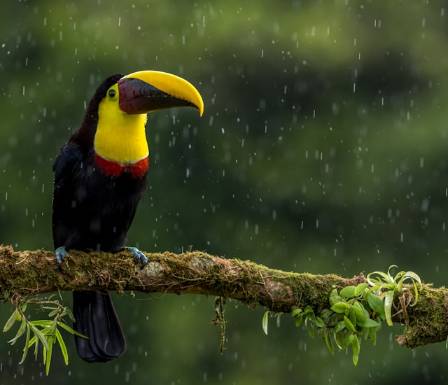
Toucans are incredibly popular animals across the globe. These unmistakable birds captivate children on nature programs. They also feature prominently in various animated advertisements. These highly intelligent creatures live deep within the tropical rainforests. You can find them throughout Central America and South America. They are famous for their oversized and brilliantly colored bills. Learning about their hidden lives reveals many surprising biological truths. They spend most of their time high up in the dense jungle canopy.
Richardson Leo
लेखक
लेख परिचय
नीचे पूरा लेख पढ़ें।
अनुभाग
समाचार
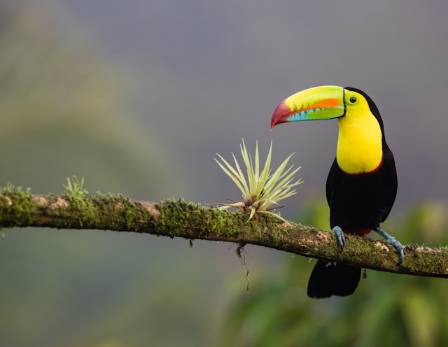
Toucans are incredibly popular animals across the globe. These unmistakable birds captivate children on nature programs. They also feature prominently in various animated advertisements. These highly intelligent creatures live deep within the tropical rainforests. You can find them throughout Central America and South America. They are famous for their oversized and brilliantly colored bills. Learning about their hidden lives reveals many surprising biological truths. They spend most of their time high up in the dense jungle canopy.
The Incredibly Noisy World of Rainforest Toucans
The common name of these birds originates directly from the unique sounds they produce. They rank among the absolute loudest avian species on the planet. Their beautiful songs actually sound remarkably like croaking frogs. They also produce rapid tapping and loud clattering noises using their massive beaks. Certain species can even generate sharp barking and deep growling sounds. Some individuals make noises that resemble a braying donkey. Female birds typically possess much higher vocal pitches than their male counterparts. They utilize these loud calls to gather the flock to excellent feeding locations. These unique vocalizations also help different groups distinguish themselves from rivals.
The Massive Family and the Mystery of the Giant Beak
These creatures belong to a prominent scientific family called Ramphastidae. This biological group contains roughly forty distinct avian species. The family includes standard large birds alongside smaller varieties. These smaller relatives are known as toucanets and aracaris. Every single member shares one striking physical characteristic. They all possess a bill that appears completely disproportionate to their body size. Scientists still debate the exact evolutionary purpose of this massive structure. The bright colors might play a critical role in attracting potential mates during the breeding season. The imposing size could also frighten dangerous predators away. It might intimidate rival birds that compete for the same food sources. However the hollow beak is entirely useless in an actual physical fight. It consists of a delicate honeycomb network made of keratin. This material remains very light and lacks real structural strength. The large appendage proves incredibly useful during daily feeding times. The birds use the long structure to reach distant fruits hanging on fragile branches. They manipulate the food with amazing dexterity using the serrated edges to peel the skin. The massive beak also functions as a highly efficient internal cooling system. The birds actively regulate the blood flow directly into the structure. This biological trick allows them to control their overall body temperature easily. They tuck the giant beak safely under their wings while sleeping. This action prevents them from losing too much warmth during chilly nights. Unfortunately this enormous structure makes them look highly awkward in the air. They are not graceful flyers at all. They move through the sky with a slow and undulating motion. They often appear completely unbalanced as if the heavy beak is actively pulling the rest of the bird forward.
Life in the High Canopy and Extreme Size Differences
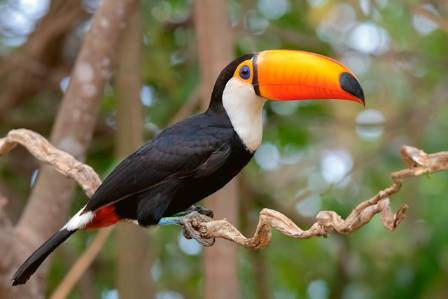
These unique birds spend far more time hopping along branches than flying through the air. They pass the vast majority of their lives nestled deep within the leaves of the highest rainforest trees. They strongly prefer mature forests located at low elevations. These habitats provide quick access to an abundance of perfectly ripe fruit. They display a strong dislike for flying across open rivers. Because of this behavior wide waterways frequently create permanent geographic boundaries between different species. Most individuals reside within the exact same forest patch all year round. However a few specific populations choose to migrate seasonally. They move back and forth between high mountainside woods and lower valleys. The physical dimensions within this avian family vary dramatically. The famous toco toucan ranks as the absolute largest variety. It reaches an impressive length of twenty four inches. It can weigh up to nearly two pounds. In sharp contrast the tiny tawny tufted toucanet measures only twelve inches long. The absolute lightest member is the lettered aracari. This incredibly small bird weighs a mere three ounces.
Social Relationships and Serious Survival Threats in the Wild
These creatures are exceptionally friendly and highly social animals. They prefer to live together in active flocks containing between three and twelve individuals. Sometimes larger groups of twenty or more birds share the same territory. Wildlife experts believe that these pairs remain strictly monogamous throughout their lives. The birds frequently toss ripe fruit back and forth to each other. This playful behavior serves as an essential part of their courtship ritual. The famous toco toucan currently holds a conservation status of least concern. This classification exists because the species occupies an exceptionally vast geographic range. However their total population numbers are steadily declining every year. The primary threats facing these beautiful birds are severe habitat destruction and aggressive hunting. Humans rapidly clear the ancient rainforests to build commercial farms and residential houses. They also construct major highways through the jungle. For instance aggressive agricultural growers invaded the native home of the yellow browed toucanet in Peru. This displacement forced the unique bird onto the official endangered species list. Similarly the beautiful ariel toucan faces near extinction in Brazil. The Eastern red necked aracari suffers immensely from rapid deforestation as well. Hunters also target these animals constantly. They capture live birds to sell them into the illegal pet trade. They also kill them for food or collect them as trophies. Furthermore local farmers sometimes shoot them as common pests. This happens when the hungry flocks raid fruit orchards to steal valuable crops.
Hidden Nesting Habits and Saving the Ecosystem
These birds consistently utilize natural tree cavities to build their hidden nests. They rarely ever travel down to the dangerous forest floor. They frequently occupy old hollows that were previously created and abandoned by industrious woodpeckers. The female lays up to five eggs every single year. Both parents share the incubation duties equally for about two weeks. They display a highly unique sleeping posture inside the tight dark hollows. The bird turns its head completely backward. It tucks its long beak safely beneath a wing. Then it flips its tail feathers straight up over its head. This clever arrangement transforms the animal into a tidy little ball. These creatures are also entirely monomorphic. This scientific term means that males and females look exactly identical. There is no visible way to tell the sexes apart based on their outward appearance. Both genders display the exact same showy colors. Scientific research indicates that this trait evolves in species where group cooperation matters immensely. The visual similarity helps them maintain peace within the large flock. Finally these birds play a vital role in keeping the tropical rainforest alive. They consume a massive array of native jungle fruits every day. They pass the hardy seeds completely undamaged through their droppings. This natural process disperses the plants across vast distances. It directly helps the forest regenerate and maintains crucial biological diversity.