विशेष लेख
Five ways to use tarot cards that aren’t fortune telling
When most people hear “Tarot cards,” they immediately imagine fortune-telling or crystal-ball-style predictions about the future. I used to think exactly the same way for years. While Tarot is often used for divination, limiting it only to that purpose misses most of its potential. In fact, I personally use Tarot almost every day—but not for predicting outcomes.
Lucas Hayes
लेखक
लेख परिचय
नीचे पूरा लेख पढ़ें।
अनुभाग
समाचार
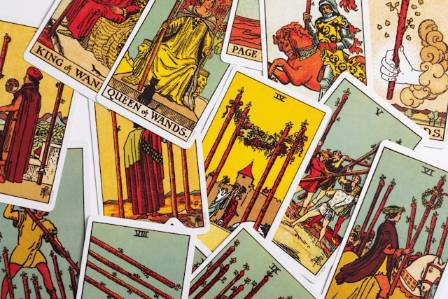
When most people hear “Tarot cards,” they immediately imagine fortune-telling or crystal-ball-style predictions about the future. I used to think exactly the same way for years. While Tarot is often used for divination, limiting it only to that purpose misses most of its potential. In fact, I personally use Tarot almost every day—but not for predicting outcomes.
So what else can Tarot be used for? Below are five creative and practical ways to work with Tarot that go beyond fortune-telling.
1. As a writing and storytelling trigger
I once heard a podcast about using Tarot as a creative writing aid, and it completely changed how I saw the cards. Tarot can help you explore a character’s personality, uncover hidden motivations, or even generate unexpected plot twists. It can be used to design minor characters, imagine backstories, or decide what happens next in a scene by drawing a card for inspiration.
2. For daily reflection and awareness
This is my personal favorite approach. I like to draw a card each day and reflect on how its meaning shows up in my life. Sometimes I do this in the morning as a guide for the day ahead, but often I prefer doing it at night to reflect on what has already happened and what lessons I can take from it.
This practice is helpful in two ways. First, it deepens my understanding of Tarot symbols through real-life experience. The cards reflect universal human themes, and over time you start noticing how those patterns appear in everyday life.
More importantly, it encourages reflection. I pause and ask myself: What kind of day was this? What went well? What didn’t? What did I learn? Writing these reflections down in a journal can reveal long-term patterns—some encouraging, others pointing to areas that need attention.
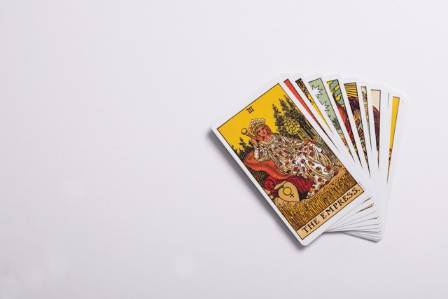
3. To connect with inner guidance
Tarot can also act like a reflective partner—something that helps you hear your own inner thoughts more clearly. It doesn’t replace your judgment; instead, it helps bring hidden thoughts into awareness.
For example, if you are choosing between two career paths, you might draw cards representing the advantages of each option and one for overall guidance. This doesn’t make the decision for you, but it helps you understand your feelings more clearly. It’s important to remember that Tarot is not meant to remove responsibility from decision-making—the final choice always belongs to you.
4. For setting goals and intentions
I first encountered this idea through a discussion with Mary K Greer, where Tarot was used intentionally rather than randomly. Instead of shuffling and drawing, you deliberately explore the deck based on what you want to focus on.
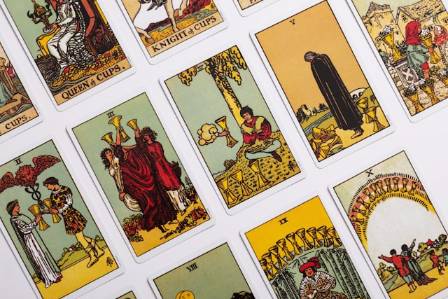
For instance, if you are thinking about work or career, you might separate out the Pentacles suit, which relates to material life such as work, money, and stability. Lay the cards out and observe which one naturally draws your attention.
A card like the Eight of Pentacles might represent discipline and skill-building. By studying its imagery, you can reflect on your current path: Are you developing your abilities? Do you need to learn something new? What steps would move you closer to mastery? This kind of exercise turns a single card into a powerful tool for planning and self-motivation.
5. As a tool for games and creative role-playing
This one is more playful, but very effective: Tarot can be used in tabletop games like Dungeons & Dragons to generate ideas for encounters, characters, or story events.
For example, you might assign different cards to elements of a game scenario—such as the quest objective, the challenge, the environment, supporting characters, and the antagonist. Each card adds a layer of randomness and creativity, helping Dungeon Masters build richer stories.
This reminds us that Tarot originally functioned as a card game in its earliest form. You can even use it for simple games like matching or trick-taking styles. It’s a flexible system that can be adapted for play as well as reflection.
Final thought
Tarot is not limited to predicting the future. It can be used for creativity, reflection, self-understanding, goal setting, and even games. In reality, its possibilities are only limited by imagination. And for those who still use it for divination—that’s fine too. But it’s only one small part of what Tarot can be.
यह भी पढ़ें
पारंपरिक थाई पोशाक: शैलियों, शिष्टाचार और प्राप्ति के लिए एक मार्गदर्शिका
सूरजलाल बागड़ा

The Formula Behind Artistic Creativity
Bob

The Shift and Evolution of A Segment City Cars in the Global Automotive Market
Ryan Mitchell

महासागरों में रंगीन घटनाओं की आकर्षक दुनिया की खोज।
आराधना
बर्गपार्क विल्हेल्मशोहे घूमने से पहले जानने योग्य 4 ज़रूरी बातें
उषा

5 शांत पहाड़ी झीलें जिन्हें अधिकांश पर्यटकों ने नहीं ढूंढा है
शालिनी