← मुखपृष्ठ3 मिनट का पाठ
विशेष लेख
The Evolution of the Golf Ball
The golf ball we know today has undergone numerous transformations throughout history. Its development can be traced through five major stages, beginning in the 14th century with wooden balls and culminating in the modern rubber-core designs. Exploring this history reveals how technology and innovation shaped the game of golf.
S
Sophie Turner
लेखक
लेख परिचय
नीचे पूरा लेख पढ़ें।
अनुभाग
समाचार

The golf ball we know today has undergone numerous transformations throughout history. Its development can be traced through five major stages, beginning in the 14th century with wooden balls and culminating in the modern rubber-core designs. Exploring this history reveals how technology and innovation shaped the game of golf.
The earliest golf balls are believed to have been made of wood. Although some historians argue that wooden balls were not used on traditional Scottish links courses, evidence suggests they appeared in early golf-like games elsewhere. These wooden balls remain somewhat mysterious, as few physical examples survive, leaving their exact use open to debate.
By the late 15th century, golfers in Scotland were using the “hairy” golf ball, imported from the Netherlands between 1486 and 1618. These balls were handcrafted from leather and stuffed with cow hair or straw. Local Scottish craftsmen eventually produced them domestically, and despite the later introduction of feather-filled balls, the hairy ball remained in use for its affordability well into the early 18th century. It became known as the “common” ball due to its widespread popularity.
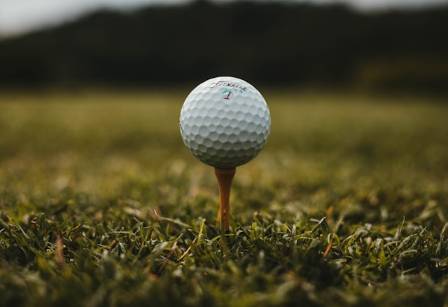
In 1618, the featherie golf ball emerged, representing a significant advancement. Like the hairy balls, featheries were made from leather, but they were tightly packed with goose or chicken feathers. This filling made the balls denser and capable of traveling farther than their predecessors. The production process was labor-intensive: feathers and leather were shaped while wet, and as they dried, the leather contracted and the feathers expanded, giving the ball its desired hardness. Once completed, the balls were painted and marked by the maker. Featheries were costly and challenging to produce perfectly round; they also lost distance when wet and could split upon impact. During the early 19th century, Allan Robertson, considered golf’s first professional and leading ball maker, collaborated with the young Tom Morris at St. Andrews to produce featherie balls. When the guttie ball was introduced, Robertson viewed it as a threat to his business, while Morris embraced it as the future of golf, eventually opening his own shop in Prestwick, the site of the first Open Championship.
The Gutta-Percha ball, or guttie, was invented in 1848 by Dr. Robert Adams Paterson. Made from the dried sap of the Malaysian Sapodilla tree, gutties had a rubber-like consistency that allowed them to be heated and molded into a spherical shape. These balls were inexpensive, easy to repair, and aerodynamically superior to featheries. It was soon discovered that the marks left on a ball from being struck actually improved its flight. This led makers to deliberately create indented surfaces, producing consistent flight patterns. By 1890, molded gutties with patterns such as the bramble design—small raised bumps resembling the fruit—became standard, making the balls more uniform and affordable.
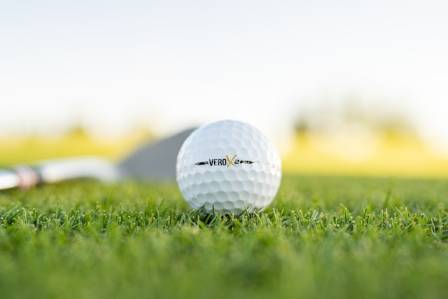
The next major leap came in 1898 when Coburn Haskell, inspired by experiments with rubber threads, developed a ball with a wound rubber core. With guidance from Bertram Work of the B.F. Goodrich Company, Haskell covered the wound core with a thin outer layer of balata sap, creating the first modern rubber-core golf ball. Initially, these balls featured bramble-style surfaces similar to the guttie, but by the early 20th century, concave dimples were introduced, enhancing flight performance and control. Over time, new materials such as Surlyn and urethane blends replaced balata, offering more durable covers resistant to indentations. Balls began to be classified by the number of layers, from two-piece to four-piece designs, allowing manufacturers to produce balls optimized for distance, spin, or control. The modern rubber-core ball, perfected through these innovations, remains the standard today. Despite variations in design, all golf balls must conform to rules set by the Royal & Ancient and the United States Golf Association, including a minimum diameter of 1.680 inches, a maximum weight of 1.620 ounces, and strict spherical symmetry.
From wooden spheres to sophisticated rubber-core constructions, the golf ball’s evolution demonstrates a continuous interplay between craftsmanship, science, and innovation, shaping the way the game is played today.
यह भी पढ़ें

en
Building and Sustaining Confidence: A Comprehensive Guide
Henry Levi

en
Unlocking the Power of Beauty: A Path to Empowerment
Atlas Grey

hi
किसी भी घर (यहां तक कि एक छोटे से अपार्टमेंट) में एक आरामदायक रीडिंग नुक्कड़ कैसे बनाएं
रोहन

en
11 Facts You Absolutely Need to Know About the Most Beautiful Reefs in the Ocean
Benjamin Carter

en
The World’s Most Followed Sports
Sophia Bell
hi
अपने टेनिस गेम को बेहतर बनाने के लिए दस त्वरित टिप्स
आदित्य