विशेष लेख
Interesting Facts You Never Knew About Daylilies
Daylilies have become a favorite in gardens across the world because they are beautiful, reliable, and incredibly easy to grow. Their versatility makes them suitable for many different landscapes, yet their popularity has caused some people to overlook how remarkable these plants truly are.
Declan Foster
लेखक
लेख परिचय
नीचे पूरा लेख पढ़ें।
अनुभाग
समाचार
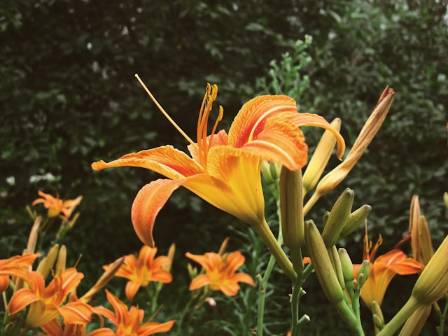
Daylilies have become a favorite in gardens across the world because they are beautiful, reliable, and incredibly easy to grow. Their versatility makes them suitable for many different landscapes, yet their popularity has caused some people to overlook how remarkable these plants truly are.
Although they are often considered ordinary garden flowers, daylilies are far from average. These long-lasting perennials have many unique qualities that make them valuable additions to gardens.
One of their most impressive characteristics is their ability to adapt to a wide range of environments. Daylilies can survive in growing zones from 2 through 11, with many varieties performing especially well in zones 4 through 11. They tolerate both freezing winters and hot summer conditions.
These plants also grow successfully in many different climates. Whether placed in dry, warm regions or cooler areas with more moisture, daylilies can continue to thrive.
Their soil tolerance is equally impressive. Daylilies can grow in heavy clay, rich garden soil, or even low-quality dry soil. Few flowering perennials can match their ability to perform well under such varied conditions.
Daylilies Help Prevent Soil Erosion
Besides their beauty, daylilies provide practical benefits in the landscape. Their spreading growth habit makes them useful as groundcover plants and natural weed suppressors.
The thick underground tubers create a strong network of roots that helps stabilize soil, even on steep slopes. These sturdy roots hold onto the ground and reduce erosion in challenging areas.
Almost any daylily variety can be used for soil protection, but some spreading types are especially effective. The tawny daylily (Hemerocallis fulva) is commonly used because it naturalizes easily in zones 3 through 9. It is often seen growing along roadsides, old properties, and open spaces where it has established itself naturally.
Daylilies Grow Beautifully in Containers
Many gardeners are surprised to learn that daylilies are excellent container plants. While they are commonly seen planted in flower beds, their attractive foliage and dependable flowers make them equally impressive in pots.
Their long, grass-like leaves gently spill over the edges of containers, while tall flower stems add height and color. This combination allows daylilies to act as a thriller, filler, and spiller all at once in container arrangements.
Choosing the right container size is important for healthy growth. Smaller dwarf daylilies usually perform well in pots around 12 to 15 inches wide, while larger varieties may require containers up to 24 inches in diameter.
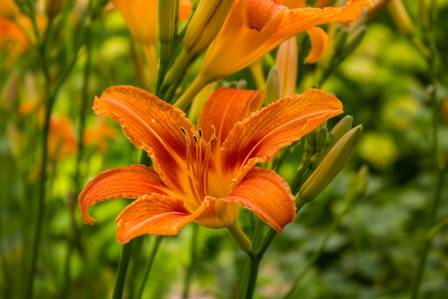
Thousands of Daylily Varieties Exist Worldwide
Daylilies originally come from much of Asia and later spread to Europe during the 18th century, where they quickly gained popularity among gardeners. European settlers eventually introduced them to North America, where they became naturalized by the early 1800s.
About a century later, plant breeders began developing new hybrid varieties from wild daylilies that had adapted to their surroundings. Their durability, beauty, and adaptability encouraged extensive breeding efforts.
Today, there are believed to be more than 80,000 different daylily varieties, and new selections continue to appear every year. These varieties offer an incredible range of flower colors, sizes, patterns, and growth habits.
Daylilies Are Not True Lilies
Despite their common name, daylilies are not actually members of the true lily family. Daylilies belong to the genus Hemerocallis in the family Asphodelaceae, while true lilies belong to the genus Lilium in the family Liliaceae.
When purchasing plants, the botanical name can help tell them apart. Daylilies will always have names beginning with Hemerocallis, while true lilies will have names beginning with Lilium.
This difference is also important when discussing safety and edibility. True lilies can be highly toxic to humans and animals, while certain daylily species, especially the common orange daylily (Hemerocallis fulva), have been used as edible plants for generations.
Daylilies Are Highly Drought Resistant
Few drought-tolerant perennials offer the combination of rich foliage and abundant flowers that daylilies provide. Most daylily varieties require very little water once established.
For gardeners living in areas with dry summers or occasional drought conditions, daylilies are an excellent choice. They maintain attractive leaves and colorful blooms even during periods of heat and limited rainfall.
Their ability to survive dry conditions comes largely from their thick, tuberous roots. These underground structures store moisture and nutrients, allowing the plant to endure challenging weather.
Daylilies Can Also Handle Moist Conditions
Although daylilies are known for their drought tolerance, they are surprisingly adaptable to wetter environments as well. While excessive standing water can eventually cause root problems, many varieties tolerate consistently moist conditions better than expected.
Gardeners in areas with frequent summer rain or naturally damp soil should not overlook daylilies. Many types continue growing successfully when provided with extra moisture.
Their ability to stabilize soil also makes them useful near ponds, streams, and other water features where erosion control is needed. Their colorful flowers can brighten waterside gardens while helping protect the landscape.
Some Daylilies Bloom Repeatedly Throughout the Season
The name “daylily” comes from the fact that individual flowers usually last only one day before being replaced by new blooms. Traditional varieties often produce a strong summer flowering period that lasts several weeks.
However, modern breeding has introduced varieties with much longer flowering seasons. Reblooming daylilies can produce flowers more than once during the growing season, often blooming in late spring or early summer and then returning with another display in late summer or early fall.
Some everblooming varieties continue producing flowers throughout spring and summer without a major break. These long-flowering types provide extended color and help solve the short blooming period commonly associated with traditional daylilies.
Why Daylilies Deserve a Place in Every Garden
With their remarkable adaptability, low maintenance needs, colorful flowers, and practical benefits, daylilies are much more than common garden plants.
Whether used for borders, containers, slopes, water-side landscapes, or drought-resistant gardens, daylilies offer beauty and reliability in countless settings. Their wide variety of forms and long flowering periods make them one of the most valuable perennials for gardeners everywhere.
यह भी पढ़ें

The four largest interchanges in the United States
Jane
20 of the world’s best soups
Eleanor Davis

Harbin International Ice and Snow Sculpture Festival: A Winter Wonderland of Frozen Artistry
Amelia Quinn

सुंदर परिदृश्य और रहस्यमय वाइब्स के लिए अमेरिका में 5 सर्वश्रेष्ठ रेगिस्तान शहर
स्टेसी लीसा

नए रॉकेट्स अंतरिक्ष तक पहुंचने के लिए एक अवसर की खिड़की का प्रतिनिधित्व करते हैं
काव्या

एफिल टॉवर के बारे में 5 रोचक तथ्य और राज
चिराग