← मुखपृष्ठ4 मिनट का पाठ
विशेष लेख
These 10 Megacities Are Home to Over 250 Million People
Here is a look at the most populous metropolitan areas on the planet, highlighting their immense scale and global significance.
J
John Ward
लेखक
लेख परिचय
नीचे पूरा लेख पढ़ें।
अनुभाग
समाचार
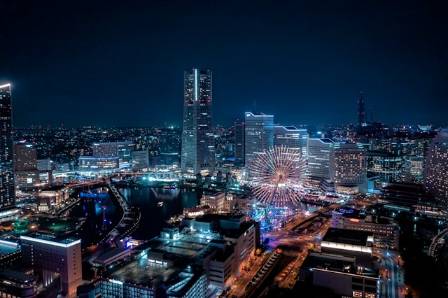
Here is a look at the most populous metropolitan areas on the planet, highlighting their immense scale and global significance.
Tokyo-Yokohama, Japan
Population: 37,732,000
The Greater Tokyo Area, encompassing Tokyo Metropolis and key neighboring cities like Yokohama, Kawasaki, and Saitama, is the world's most populous urban region. Its continuous built-up area spans approximately 3,178 square miles (8,231 km²), comparable in size to the island of Puerto Rico. Beyond its demographic scale, it holds the distinction of hosting the planet's second-largest urban economy, trailing only New York City. Remarkably, despite its vast size, it is consistently ranked as one of the safest and most livable major metropolitan areas globally.
Jakarta, Indonesia
Population: 33,756,000
Situated on Java, the world's most densely populated island, Jakarta serves as the political, economic, and cultural nucleus of Indonesia. The Greater Jakarta metropolitan area, covering 1,369 square miles (3,546 km²), includes the capital's special region and the integrated urban fabric of surrounding municipalities such as Bogor, Depok, Tangerang, and Bekasi. It is the dominant urban agglomeration and economic center in Southeast Asia.
Delhi, India
Population: 33,226,000
Delhi, a city and union territory with a rich historical legacy, anchors the Indian subcontinent's largest urban sprawl. The National Capital Territory of Delhi, which includes the capital city of New Delhi, is home to 18.3 million people. This core expands into the National Capital Region (NCR), a planning area that incorporates booming satellite cities like Faridabad, Ghaziabad, Gurugram, and Noida, forming a massive agglomeration of over 33 million. With an estimated annual growth rate of 2.73%, it is one of the fastest-expanding megacities worldwide.
Guangzhou-Foshan, China
Population: 26,940,000
As the capital of Guangdong province, Guangzhou is renowned as the heartland of Cantonese culture and hosts the world's largest trade fair. While the city proper houses around 18.7 million people, its contiguous urban area merges with the neighboring city of Foshan, creating the world's fourth-largest metropolitan region. It is crucial to note that Guangzhou is the central node of the Pearl River Delta (PRD) megalopolis—a massive, interconnected urban web that includes Shenzhen, Hong Kong, Macau, and other major cities, collectively housing an estimated 85 million residents in the broader Greater Bay Area.
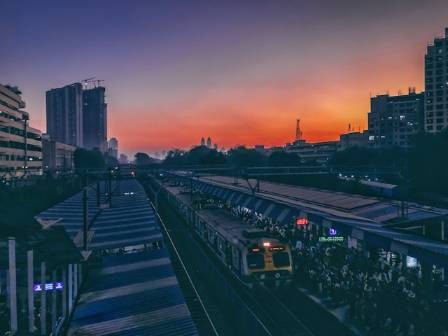
Mumbai, India
Population: 24,973,000
India's financial capital, Mumbai, has a city population of approximately 17.2 million. The broader Mumbai Metropolitan Region supports nearly 25 million inhabitants. As a global financial hub, it frequently ranks among the world's top cities for wealth and billionaire residents. Bolstered by a strong annual growth rate of around 2.1%, its global economic influence is projected to rise significantly in the coming years.
Manila, Philippines
Population: 24,922,000
While the City of Manila itself has a population of 1.8 million, it serves as the core of the National Capital Region (Metro Manila). This administrative region—a collection of highly urbanized cities including Quezon City and the financial hub of Makati—has an official population of nearly 13 million. The functional urban area, however, expands to nearly 25 million, making it the sixth-largest urban agglomeration globally and the undisputed center of Philippine economy, culture, and government.
Shanghai, China
Population: 24,073,000
A global powerhouse in finance and innovation, Shanghai boasts the largest city-proper economy in China. Its administrative area, covering 2,448 square miles (6,341 km²), contains almost 24.9 million people, making it the world's second-largest city by this measure after Chongqing. The slightly smaller continuous built-up area, which is the basis for this ranking, is home to just over 24 million residents. Its status is reinforced by hosting the world's busiest container port.
São Paulo, Brazil
Population: 23,086,000
São Paulo is the most populous city in Brazil, the Americas, and the entire Southern Hemisphere. The city proper is home to 12.3 million people, and it is the largest Portuguese-speaking city worldwide. The expanded metropolitan area, which includes cities like Guarulhos and São Bernardo do Campo, forms a colossal urban region of over 23 million people, driving the largest metropolitan economy in Latin America. A notable cultural fact is that São Paulo hosts the largest ethnic Japanese community outside of Japan.
Seoul-Incheon, South Korea
Population: 23,016,000
The capital of South Korea, Seoul, is a global center for technology, finance, and culture. The city itself houses close to 10 million people, but its greater urban area seamlessly incorporates the metropolis of Incheon and much of Gyeonggi province, creating a combined population of 23 million. Like Tokyo, it is frequently cited as one of the world's safest and most livable major cities, despite having an urban density roughly five times greater than the New York metropolitan area.
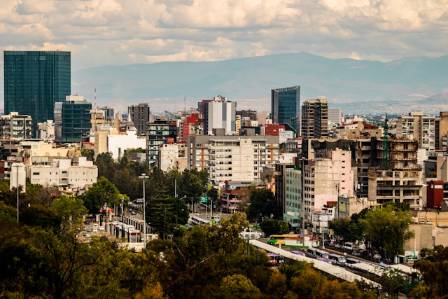
Mexico City, Mexico
Population: 21,804,000
A vibrant and sprawling fusion of history, culture, and commerce, Mexico City is the most populous city in North America, with 9.2 million residents within its official limits. Its wider metropolitan area extends across dozens of municipalities from the State of Mexico and Hidalgo, forming an urban agglomeration of nearly 22 million people. It stands as one of the most significant and productive economic clusters in the Western Hemisphere.
यह भी पढ़ें

en
Best Strawberry Cake from Scratch
Hazel Orion

en
Ultimate Cream Slices with Puff Pastry and Vanilla Cream
Ethan Carter

en
A Concise Manual for Coordinating Sneakers with Every Ensemble
Dorian Blackwood

hi
सफेद कपड़े कैसे पहनें?
राघव

hi
प्रसिद्ध पास्ता के आकार और उनकी कहानियाँ
रूद्र

en
The Evolution of the Golf Ball
Sophie Turner