विशेष लेख
What astronauts do: Science, spacewalks and chores
The universe is filled with stars, planets, nebulae, and distant galaxies. Yet among these incredible cosmic wonders, there is another remarkable presence: human beings living and working in space. These individuals are known as astronauts.
Connor Wells
लेखक
लेख परिचय
नीचे पूरा लेख पढ़ें।
अनुभाग
समाचार
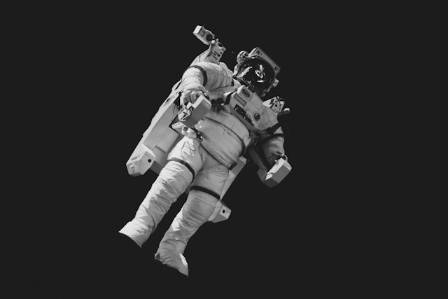
The universe is filled with stars, planets, nebulae, and distant galaxies. Yet among these incredible cosmic wonders, there is another remarkable presence: human beings living and working in space. These individuals are known as astronauts.
Astronauts are far more than people who float inside spacecraft or gaze at Earth through a window. Their profession requires extensive training, technical expertise, physical endurance, and strong teamwork. From conducting scientific investigations to maintaining spacecraft systems, astronauts play a crucial role in expanding our understanding of space.
The Main Duties of an Astronaut
While many people imagine astronauts planting flags on the Moon or performing dramatic spacewalks, most of their daily responsibilities involve highly skilled work that supports science and exploration.
Scientific Experiments
A major purpose of sending humans into space is research. Astronauts perform a wide variety of experiments that cannot be conducted under Earth's gravity.
These studies may focus on biology, medicine, physics, materials science, or technology development. The microgravity environment allows scientists to observe processes and behaviors that are impossible to study on Earth.
Spacewalk Operations
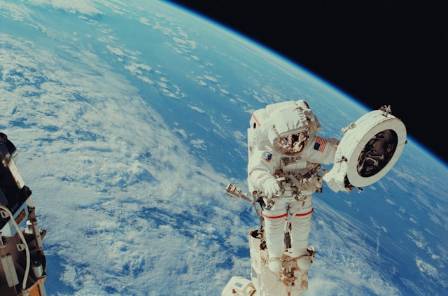
Spacewalks, formally known as Extra-Vehicular Activities (EVAs), are among the most challenging tasks astronauts perform.
During these missions, astronauts leave the safety of their spacecraft to install equipment, repair systems, upgrade hardware, or test new technologies. Because they work in the harsh environment of space, every movement must be carefully planned and executed.
Equipment Maintenance
Space stations and spacecraft contain thousands of components that require constant attention.
Astronauts often act as mechanics, electricians, computer technicians, and repair specialists. They inspect systems, replace faulty parts, solve technical issues, and ensure that life-support equipment continues functioning properly.
Daily Exercise
Living in microgravity causes muscles and bones to weaken over time.
To counter these effects, astronauts spend roughly two and a half hours each day exercising. Specialized treadmills, bicycles, and resistance machines help them maintain strength, cardiovascular health, and bone density while in orbit.
Communication Duties
Astronauts maintain regular contact with mission control teams on Earth.
They provide updates about mission activities, report technical conditions, transmit scientific data, and receive operational instructions. Many astronauts also participate in educational programs and public outreach events, helping inspire future generations of scientists and explorers.
Spacecraft Operations
Some astronauts are responsible for piloting spacecraft.
Although modern vehicles rely heavily on computerized systems and automation, astronauts must be prepared to manually control spacecraft when necessary. Their duties may include docking procedures, orbital maneuvers, and navigation tasks during complex missions.
Everyday Life in Space
Astronauts must also handle ordinary daily activities. Tasks that seem simple on Earth become surprisingly difficult in a weightless environment.
Personal Hygiene
Basic hygiene requires special methods in space.
For example, washing hair involves using specially designed rinseless products and controlled amounts of water. Because liquids float in microgravity, astronauts must carefully manage every drop to prevent water from drifting into equipment.
Preparing Meals
Space food has improved significantly over the decades.
Early astronauts often relied on compressed food cubes and pureed meals packaged in tubes. Today, astronauts aboard space stations have access to a wider variety of foods. Meals are typically heated using specialized ovens or rehydrated with hot water before consumption.
Even with these improvements, preparing and eating food in space remains very different from dining on Earth.
Sleeping
Sleeping in orbit also presents unique challenges.
Without gravity, astronauts do not lie in beds. Instead, they secure themselves in sleeping bags attached to walls or other surfaces inside the spacecraft, preventing themselves from floating around while asleep.
How to Become an Astronaut
Becoming an astronaut is one of the most competitive career paths in the world.
Space agencies select only a tiny percentage of applicants, looking for candidates who combine academic achievement, professional expertise, physical fitness, and psychological resilience.
Educational Requirements
For agencies such as NASA, applicants generally need a university degree in a field such as:
Engineering
Biological Sciences
Physical Sciences
Computer Science
Mathematics
Advanced degrees often strengthen an applicant’s qualifications.
Professional Experience
Candidates typically need several years of relevant work experience.
Pilots may qualify through extensive flight experience, often including significant time as pilot-in-command of high-performance aircraft.
Physical Standards
Astronauts must pass demanding medical examinations.
Spaceflight places significant stress on the human body, so candidates must demonstrate excellent health and the ability to withstand challenging physical conditions.
Personal Qualities
Technical knowledge alone is not enough.
Space agencies seek individuals who can remain calm under pressure, work effectively in teams, communicate clearly, solve problems quickly, and demonstrate leadership when necessary.
Because astronauts often live and work closely with others for extended periods, interpersonal skills are extremely important.
Careers After Spaceflight
Many astronauts continue making significant contributions long after their missions end.
Education and Outreach
Some former astronauts become educators, sharing their experiences with students and encouraging interest in science, technology, engineering, and mathematics.
Authors and Speakers
Many astronauts write books, deliver lectures, and participate in public events. Their firsthand experiences provide valuable insight into space exploration and human achievement.
Government Service
Several astronauts have entered politics or public service roles, applying their scientific and technical backgrounds to policymaking and national leadership.
Aerospace Industry
Former astronauts frequently work with aerospace companies, helping develop new spacecraft, propulsion systems, and exploration technologies.
Scientific and Humanitarian Initiatives
Others dedicate their careers to research programs, international collaborations, educational foundations, and projects that advance science and society.
Why Astronauts Matter
Astronauts are much more than travelers journeying beyond Earth.
They are researchers conducting groundbreaking science, engineers maintaining complex machines, pilots navigating spacecraft, and ambassadors connecting humanity with the wider universe.
Their work helps us better understand our planet, develop new technologies, and prepare for future missions to the Moon, Mars, and beyond.
As humanity continues pushing deeper into space, astronauts will remain at the forefront of discovery, expanding our knowledge and revealing new perspectives about our place in the cosmos.
Conclusion
Astronauts live and work in one of the most challenging environments imaginable. Their responsibilities extend far beyond floating in microgravity or viewing Earth from orbit. They conduct scientific research, repair critical systems, perform spacewalks, operate spacecraft, and serve as representatives of humanity in space.
Through their dedication, courage, and expertise, astronauts help unlock the mysteries of the universe while inspiring people around the world. As exploration advances in the coming decades, their contributions will continue shaping humanity’s future among the stars.
यह भी पढ़ें

आदर्श प्राकृतिक फ्रूट स्मूदी बनाना
अभिनव गोयल

9 Powerful Reasons Why Coffee (In Moderation) Is Great for Your Health
Alex
9 Breathtakingly Scenic Desert Oases
Silas

छुट्टियाँ मनाने से आपकी सेहत कैसे बेहतर होती है
अर्जुन

जीप ऑफ-रोडिंग 101: कम यात्रा वाली सड़कों पर चलने की गाइड
श्वेता

फूलों की सजावट के 15 बेहतरीन आइडिया
सत्य