विशेष लेख
Most Important Prehistoric Cave Paintings in the World
Prehistoric cave paintings offer vivid and enigmatic glimpses into the earliest moments of human creativity. Explore seven of the world’s oldest examples of rock art.
Caspian Vale
लेखक
लेख परिचय
नीचे पूरा लेख पढ़ें।
अनुभाग
समाचार
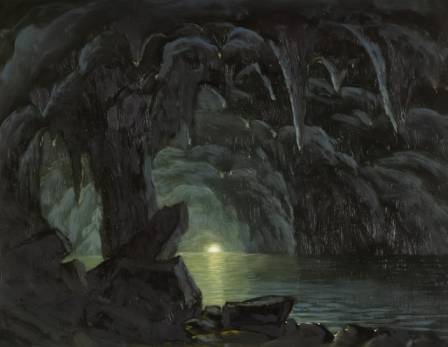
Prehistoric cave paintings offer vivid and enigmatic glimpses into the earliest moments of human creativity. Explore seven of the world’s oldest examples of rock art.
From discoveries in 19th-century Europe to groundbreaking finds in 21st-century Indonesia, prehistoric rock art—which includes paintings and engravings on enduring surfaces like caves, cliffs, boulders, and rock shelters—represents some of humanity’s earliest artistic expressions. Found across nearly every continent, these works often depict stylized animals, human figures, handprints, and geometric patterns, created with natural pigments such as ochre or charcoal. Without written explanations from their creators, modern interpretation is difficult, but hunting rituals, spiritual practices, and shamanic ceremonies are frequently suggested as the purpose behind these images. Here are seven of the most remarkable prehistoric cave and rock art sites worldwide.
Altamira Cave Paintings, Spain
The cave paintings at Altamira were the first to be recognized as prehistoric art, though acceptance took time. Amateur archaeologist Marcelino Sanz de Sautuola and his daughter Maria first explored the cave. It was 12-year-old Maria who noticed the large, lively bison painted on the ceiling.
Additional animal depictions and carvings were later documented. Don Sautuola connected these sophisticated paintings to the small-scale prehistoric artifacts then known, but early experts were skeptical, doubting that prehistoric humans could produce advanced artwork. It was only after similar sites were discovered in France that Altamira gained recognition as an authentic Ice Age artistic site.
Lascaux Cave Paintings, France
Found in 1940 by children and their dog, the Lascaux caves became a cornerstone of European rock art. French priest and amateur archaeologist Abbé Henri Breuil called the site “the Sistine Chapel of Prehistory.” Though Chauvet Cave, discovered in 1994, contains older animal depictions over 30,000 years old, Lascaux remains globally famous for its detailed images of horses, bison, mammoths, and deer.
The Hall of Bulls showcases large, expressive figures that seem to move along the undulating cave walls. One mysterious human-animal hybrid, nicknamed “bird man,” may reflect shamanic or ritualistic symbolism. Despite early recognition, heavy visitation threatened the paintings, leading to their closure. Tourists can still explore high-quality replicas on site.
Apollo 11 Cave Stones, Namibia
Africa hosts an abundance of prehistoric rock art, though much remains under-researched. The Apollo 11 cave stones in Namibia—a name inspired by the Apollo 11 space mission of 1969—comprise seven small granite slabs with six animal images in charcoal, ochre, and white pigment. Representing a zebra, a rhinoceros, and other indeterminate quadrupeds, they are estimated to be around 25,000 years old.
Other notable African sites include Blombos Cave, an ancient paint-making workshop dating back 100,000 years, and the Drakensberg rock art site, which features thousands of human and animal images created by the San people over millennia. Efforts such as the Trust for African Rock Art and the African Rock Art Image Project at the British Museum are preserving these priceless works.
Kakadu National Park and Other Australian Rock Art Sites
Humans have inhabited what is now Kakadu National Park in Arnhem Land for approximately 60,000 years. Surviving rock art there dates back no more than 25,000 years, with the most recent painting created in 1972 by Nayombolmi, an Aboriginal artist. Various artistic styles emerged over time, including the “X-Ray Style,” which depicts both internal and external anatomy of animals.
These paintings document extinct species and long-term climate changes, similar to Sahara rock art showing a greener past. Estimates suggest 150,000–250,000 rock art sites across Australia, particularly in the Kimberley and Arnhem Land regions. Rock art remains spiritually significant for Indigenous communities and continues to hold cultural power.
Lower Pecos Rock Art, Texas and Mexico
Though younger than other prehistoric examples—around 4,000 years old—the Lower Pecos Canyonlands’ cave paintings rival the world’s best. Many feature “anthropomorphs,” stylized human-like figures wearing elaborate headdresses and holding ceremonial objects, likely representing shamans and their ritualistic experiences.
Animals and geometric designs accompany these figures, with possible connections to local myths and hallucinogenic practices like peyote and mescal. However, links between these artworks and later indigenous traditions are less direct than in places like Australia.
Cueva de las Manos, Argentina
Cueva de las Manos, or the Cave of Hands, in Patagonia, Argentina, is famous for its hundreds of handprints created by blowing pigment over bare hands pressed to the rock. Alongside roughly 830 handprints, the cave contains depictions of humans, llamas, and hunting scenes.
Dating back around 9,000 years, the vibrant handprints seem to capture the gestures of prehistoric humans, offering a striking and intimate connection with early human activity.
Sulawesi and Borneo, Indonesia
In 2014, Indonesian cave art on Sulawesi’s Maros-Pangkep limestone was dated between 40,000 and 45,000 years old. The paintings feature animals and handprints, potentially the oldest representational art known. Subsequent finds on Borneo and later in Leang Tedongnge cave in Sulawesi support the idea that early artistic activity may not have originated in Western Europe, as once thought. These discoveries have reshaped our understanding of humanity’s earliest creative expression.
यह भी पढ़ें

Unlocking the Power of Beauty: A Path to Empowerment
Atlas Grey
विंटर वंडरलैंड: दुनिया के 13 सबसे खूबसूरत शीतकालीन गंतव्य
वर्षा

The World’s Most Followed Sports
Sophia Bell
एनटीटी डोकमो योयोगी बिल्डिंग
निशा
दुनिया के 9 सबसे अनोखे पेड़। आपने कितने देखे हैं?
मनन
9 Fascinating Facts About Blue-Footed Boobies
Hannah Price