विशेष लेख
The road that's the 'Eighth World Wonder'
The 1,300-kilometre Karakoram Highway (KKH) winds through some of the most breathtaking mountain landscapes on Earth. It’s the kind of road trip that inspires dreams, yet few are familiar with its history or the effort that went into building it.
Violet Dawn
लेखक
लेख परिचय
नीचे पूरा लेख पढ़ें।
अनुभाग
समाचार
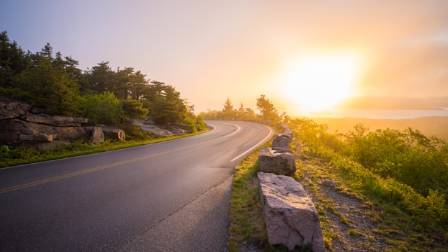
The 1,300-kilometre Karakoram Highway (KKH) winds through some of the most breathtaking mountain landscapes on Earth. It’s the kind of road trip that inspires dreams, yet few are familiar with its history or the effort that went into building it.
Fresh mountain air filled the cabin as I drove past jagged peaks that seemed to pierce the sky. Although it was mid-summer, towering snow-capped summits still clung to the high-altitude ranges. Glacial streams tumbled down into the turquoise river threading through Pakistan’s Hunza Valley, a place British novelist James Hilton famously dubbed “Shangri-La.”
I was navigating the Karakoram Highway, often described as the “Eighth Wonder of the World.” Its dramatic scenery makes it a bucket-list journey, yet most travelers remain unaware of its origins and significance.
Historically, the KKH traces its roots to the Silk Road, with initial paths carved by local inhabitants centuries ago. The modern highway, however, took nearly two decades to construct and involved over 24,000 Pakistani and Chinese workers. By 1978, it opened for vehicular traffic, bringing trade, tourism, and a new accessibility to one of the planet’s most remote corners.
Spanning from Hasan Abdal near Islamabad to Kashgar in China’s Xinjiang region, the highway passes through Khunjerab Pass, the highest paved border crossing in the world at roughly 4,700 meters. Yet it was the 194-kilometre stretch through Hunza Valley that drew me in. Nestled amidst the Karakoram Mountains, this section of the road offers stunning glaciers, alpine lakes, and towering peaks visible directly from your vehicle. Beyond the scenery, it is the people and traditions of Hunza that give this stretch of the highway its unique soul.
Hunza Valley: A World Apart
Situated in Gilgit-Baltistan between Xinjiang and Afghanistan’s Wakhan Corridor, Hunza remained largely isolated until the 20th century. Its rugged terrain preserved the Burusho and Wakhi communities’ languages, music, and customs—distinct from anything else in Pakistan or the wider world.
The Burusho people speak Burushaski, one of Asia’s few language isolates, whose origins remain a mystery. Some scholars have suggested ties to Balkan languages, but no definitive connection has been established.
While the KKH has brought modern conveniences, it has also disrupted fragile ecosystems and led some locals to abandon long-standing traditions. Festivals like Ginani (celebrating spring) and traditional embroidered attire are increasingly rare. Still, dedicated community members are striving to safeguard Hunza’s cultural heritage.
Altit: Preserving Music and Tradition
My first stop was Altit, famous for its 1,100-year-old fort and its efforts to protect local culture. There, I met musician Mujib Ruzik in a café, framed by the snow-capped Rakaposhi (7,788m) and Diran (7,266m). Nearby, the Leif Larsen Music Center teaches children and adults to play traditional instruments, keeping the valley’s folk music alive.
“We relied on music for everything—from farming to harvesting wheat, folk songs accompanied our daily lives,” Ruzik explained. “Many young people didn’t know this tradition, but now they are learning the essence of our culture.”
Although the center opened in 2016, it truly flourished under Zia Ul Karim, a native of Altit who became a pioneer in musicology and mentored over 100 students. His tragic passing in 2022 left a void, yet Ruzik continues his work.
Inside the practice room, low cushions and pillows mirrored the layout of a traditional home. The inclusive space encouraged girls to learn instruments like the rubab, reflecting Hunza’s liberal approach to gender equality within an Ismaili Islamic community.
Students performed hareep music, the valley’s local tunes, on a rubab, sitar, and dadang drum. Their haunting melodies filled the room, leaving a lasting impression of Hunza’s cultural resilience.
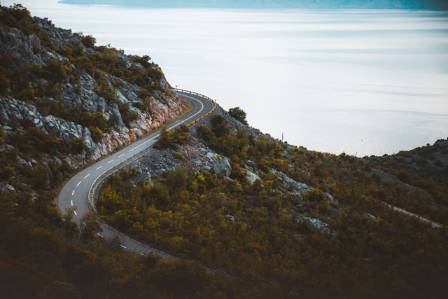
Upper Hunza: Nature and Tragedy
Continuing along the KKH, I reached Upper Hunza, or Gojal. Though culturally similar to Central Hunza, Gojalis speak Wakhi, a language unrelated to Burushaski. The highway reduced travel between the regions from days to just an hour. My arrival coincided with the striking Attabad Lake, its turquoise waters created in 2010 when a landslide destroyed villages and blocked the Hunza River. Surrounded by luxury hotels and modern “China-Pakistan Friendship Tunnels” completed in 2015, the lake symbolizes Hunza’s blend of tragedy and modernization.
Culinary Traditions and Female Entrepreneurship
Just a few kilometres further, I found Bozlanj Café, a female-run eatery offering traditional Hunza dishes, which differ greatly from mainstream Pakistani cuisine. Delicate flavors rely on ingredients like apricot oil and yak meat. I sampled mool, a local cheese, and ghilmindi, a flatbread sandwich with yoghurt and nuts.
Owners Malika Sultana and Rashida Begum started cooking local recipes in 2016, preserving culinary heritage while inspiring other women to join the workforce. Despite Pakistan’s low overall female employment rate, women in Hunza run restaurants, shops, and even carpentry businesses.
A short drive away, I visited Korgah, a female-led carpet workshop inside a 400-year-old home. Here, women preserve traditional carpet weaving, producing intricate rugs from yak and goat hair. Founded with support from the Karakoram Area Development Organisation (KADO), the factory now attracts tourists and supports families, demonstrating how culture and commerce can thrive together.
A Highway Beyond Asphalt
As I drove back toward Central Hunza, the Passu Cones’ cathedral-like peaks faded behind me. Herds of livestock ambled along the roadside, and villagers carried grass in traditional girans, reflecting enduring aspects of Hunza life.
The Karakoram Highway is architecturally impressive, but it is the valley’s people, music, food, and crafts that give it soul. The words of Ruzik resonated as I passed through the modern tunnels: “The hope is that we’ve preserved this culture for 60 years or more.”
Meeting musicians, artisans, and chefs along Hunza Valley’s routes, it became clear that the true wonder of the KKH lies not just in its mountains, but in the communities that call them home.
The Open Road celebrates remarkable highways and the journeys they enable, reminding us that some of the world’s most extraordinary adventures happen on four wheels.
यह भी पढ़ें

Soft Natural Wardrobe Guide 2026: 9 Essential Pieces to Build Your Perfect Closet
Olivia Hayes

पृथ्वी का सबसे दूर स्थित अंतरिक्ष यान कौन सा है?
देवांश

सिंगापुर को एक नए नजरिए से देखने के लिए 6 सर्वश्रेष्ठ टूर
लता
संयुक्त राज्य अमेरिका में 3 सबसे ज़्यादा बार देखे जाने वाले शहर
मकायला
Exploring the Universe Through Radio Waves
Adrian Blake

प्रत्येक गतिविधि के लिए आदर्श महिला खेल परिधान चुनने के सिद्धांत
ओम प्रकाश चावड़ा