विशेष लेख
The Shift and Evolution of A Segment City Cars in the Global Automotive Market
The A-segment represents the initial classification within the passenger vehicle categorization framework established by the European Commission. This specific designation applies to city cars, which constitute the most compact tier of passenger automobiles currently recognized in the industry. During the year 2024, total deliveries within this micro-car segment accounted for roughly four point two percent of the entire European automotive marketplace. This vehicle classification aligns closely with the specialized micro-vehicle category famously known as the kei car platform in Japan.
Ryan Mitchell
लेखक
लेख परिचय
नीचे पूरा लेख पढ़ें।
अनुभाग
समाचार
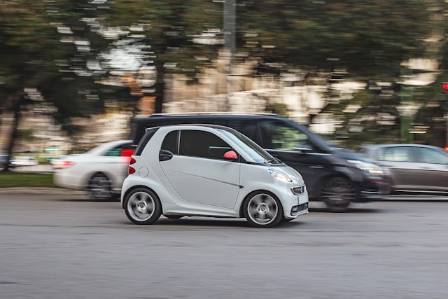
The A-segment represents the initial classification within the passenger vehicle categorization framework established by the European Commission. This specific designation applies to city cars, which constitute the most compact tier of passenger automobiles currently recognized in the industry. During the year 2024, total deliveries within this micro-car segment accounted for roughly four point two percent of the entire European automotive marketplace. This vehicle classification aligns closely with the specialized micro-vehicle category famously known as the kei car platform in Japan.
Vehicle Dimensions and Structural Proportions
As recorded during the year 2021, the physical footprint of vehicles operating within this micro classification typically ranges from approximately two point seven meters, or one hundred and ten inches, to three point seven meters, which translates to roughly one hundred and fifty inches in total length.
Primary Design Elements and Mechanical Specifications
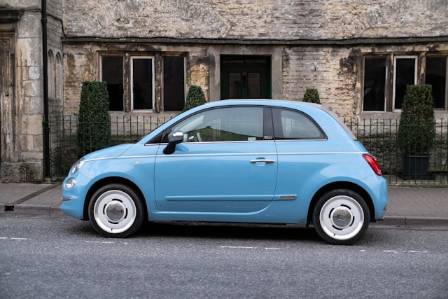
When examining historical design trends in the European marketplace, the structural profile of these micro-sized vehicles has almost universally taken the form of a traditional hatchback. However, as modern subcompact crossovers continue to gain widespread consumer favor, a noticeable transformation has begun with several fresh models adopting a rugged crossover aesthetic. Prominent illustrations of this stylistic shift toward crossover-inspired urban vehicles include models such as the Suzuki Ignis and the Toyota Aygo X. Conversely, alternative configurations like traditional three-box passenger sedans remain exceedingly rare within this specific tier because such architectural layouts frequently prove highly impractical when confined to typical micro-car dimensions.
Historically, these urban runabouts have been marketed with a traditional manual gearbox serving as the exclusive transmission setup. Shifting into the 2010s decade, automatic transmission choices became progressively more common across various manufacturer lineups. A significant portion of modern iterations frequently utilize continuously variable transmissions, while a select group of automotive brands continues to provide automated manual transmission alternatives for budget-conscious buyers.
The powertrain configurations utilized in these compact city vehicles typically feature displacement capacities spanning from one point zero to one point four liters, arranged in either an inline-three or an inline-four cylinder architectural layout. More contemporary variants entering the market frequently incorporate forced induction turbochargers or advanced hybrid electric assistance systems, placing an explicit development focus on achieving superior fuel economy metrics.

Top Performing Models and Annual Volume Tiers
During the calendar year 2020, the ten most successful vehicles by overall volume within the European micro-car segment consisted of the Fiat Panda, the Fiat 500, the Toyota Aygo, the Renault Twingo, the Volkswagen Up!, the Hyundai i10, the Kia Picanto, the Peugeot 108, the Citroën C1, and the Suzuki Ignis.
When analyzing specific annual volume distributions, the highest volume bracket encompassing one hundred thousand to two hundred thousand deliveries featured the iconic Fiat 500, specifically its first generation variant manufactured in Poland from 2007 through 2024, alongside the third-generation Fiat Panda, which has been assembled in Italy from 2011 through the present day.
The secondary volume tier, reflecting annual deliveries between fifty thousand and one hundred thousand units, comprised several competitive options. This group included the initial generation of the Volkswagen Up!, which was manufactured in Slovakia from 2011 until 2023. It also featured the third-generation Kia Picanto, produced in South Korea from 2017 to the present, and the third-generation Renault Twingo, built in Slovenia from 2014 through 2024. Rounding out this mid-level volume bracket were the third-generation Hyundai i10, assembled in Turkey from 2019 onward, and the first-generation Toyota Aygo X, which has been manufactured in the Czech Republic from 2022 through the present era.
The standard volume tier, tracking between ten thousand and fifty thousand annual registrations, contained an array of global models. This tier included the second-generation Suzuki Ignis built in India from 2016 onward, the second-generation Citroën C1 produced in the Czech Republic from 2014 to 2021, and its platform sibling, the second-generation Peugeot 108, also manufactured in the Czech Republic during that same 2014 to 2021 window. Additionally, this segment included the sixth-generation Mitsubishi Mirage assembled in Thailand from 2012 through 2024, the all-electric third-generation smart EQ fortwo built in France from 2016 to 2024, and the budget-friendly first-generation Dacia Spring, which has been manufactured in China from 2021 through the current period.
European Market Performance Trends and Historical Shifts
The overall market penetration of these urban vehicles across Europe has experienced a steady recalibration over recent years. Historical data indicates that the segment captured an eight point one percent share of the marketplace in 2017, which adjusted slightly to an even eight percent in 2018. The downward trajectory continued into 2019 with a seven point seven percent share, followed by a decline to six point eight percent in 2020, before experiencing a minor rebound to seven point three percent in 2021, and ultimately settling at four point two percent by 2024.
In the year 2019, overall deliveries of these miniature vehicles contracted by two percent, contrasting sharply with a broader automotive market expansion of one percent. This shift resulted in the segment claiming seven point seven percent of the comprehensive European automotive arena, representing one point twenty-one million total sales, which was down from the eight percent stake recorded in 2018. Because profit margins on micro-vehicles faced immense pressure due to the escalating financial costs required to satisfy more stringent safety protocols and environmental emission mandates, numerous car manufacturers began reducing their capital investments in traditional city cars or shifting their corporate focus toward exclusive battery-electric product strategies. Interestingly, within the Italian domestic market specifically, these ultra-compact models proved exceptionally resilient, commanding a substantial sixteen point four percent of total national vehicle sales during the opening half of 2019.
By the time 2020 arrived, regional deliveries of miniature cars plummeted by a full third, representing a loss of nearly four hundred thousand individual vehicle sales. This sharp contraction caused the segment to bleed significant market share, especially as the wider automotive industry experienced a twenty-four percent drop. Consequently, the micro-car category contracted to a six point eight percent share of the total European automotive landscape, dropping from the seven point seven percent recorded the prior year. Industry forecasters expected this market presence to diminish even further over subsequent years because major automakers were systematically withdrawing from this vehicle segment or converting their existing lineups entirely to electric powertrains. This strategic retreat stemmed from the compounding financial burdens of complying with stricter safety rules and particularly demanding environmental emission standards, which rendered traditional combustion-powered city cars virtually unprofitable, especially given that Europe serves as the exclusive marketplace for the vast majority of these domestic vehicle lines.
Global Market Adoption and Performance Outside Europe
When looking beyond the European continent, the market presence of these ultra-compact vehicles varies dramatically by region. In the United States consumer automotive market, these miniature city cars have historically held a very minimal footprint, accounting for a minor zero point five percent of total vehicle sales. During the year 2020, the most popular choices within this segment among American buyers included the Chevrolet Spark, the Mitsubishi Mirage, and the British-styled Mini Cooper.
Conversely, the automotive market in India has historically seen these micro-sized options command the absolute highest sales volumes of any vehicle category. However, this dominant position has entered a period of steady decline over recent times, with volume numbers dropping from a peak of seventy thousand monthly deliveries in 2014 down to roughly forty-seven thousand monthly sales by the year 2016.
Despite various regional shifts, a substantial selection of these micro-sized models achieved notable commercial success in diverse international territories outside of Europe as of 2019. This successful global contingent included versatile models such as the Hyundai Grand i10, the Honda Brio, the Kia Picanto, the Tata Tiago, the Toyota Wigo, the Suzuki Celerio, the Suzuki Wagon R, the Suzuki or Maruti Alto, the Ford Figo, the Smart ForTwo, the Citroën C1, the Peugeot 108, and the modern iteration of the classic Fiat 500.
यह भी पढ़ें

ऑर्किड्स को फिर से फूलने के लिए कैसे प्रेरित करें
तान्या

समुद्र की सुरक्षा के लिए लकड़ी का इस्तेमाल
पूजा

अनंत नीले के साथ एक गोता यात्रा
टीगन केन

परफेक्ट पॉपकॉर्न
अमित

Crafting Lifelike Sculptures: A Beginner’s Guide to Needle Felted Animal Figurines
Brandon Nicholas Parker

बीज से अंकुर तक: अंकुरित करने के लिए एक शुरुआती मार्गदर्शिका, लुईस कोहेन-सिल्वर, पीएच.डी., वी.एल.सी.ई. द्वारा
देव