विशेष लेख
Crafting Lifelike Sculptures: A Beginner’s Guide to Needle Felted Animal Figurines
The art of needle felting allows you to transform loose wool into expressive, three-dimensional animals that look remarkably realistic. Whether you are picking up a felting needle for the first time or looking to refine your sculpting skills, this guide covers the essential techniques and materials needed to bring your wool creations to life.
Brandon Nicholas Parker
लेखक
लेख परिचय
नीचे पूरा लेख पढ़ें।
अनुभाग
समाचार
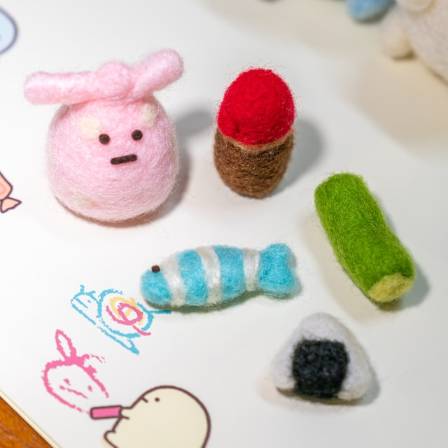
The art of needle felting allows you to transform loose wool into expressive, three-dimensional animals that look remarkably realistic. Whether you are picking up a felting needle for the first time or looking to refine your sculpting skills, this guide covers the essential techniques and materials needed to bring your wool creations to life.
Selecting the Right Wool for Realistic Sculptures
Choosing the correct fiber is the first step toward a professional-looking figurine. Most artists use a combination of wool types to achieve the right balance of structure and surface detail.
For the internal structure, Corriedale batts or slivers are ideal. This type of wool has a "toothy" texture that felts quickly, allowing you to build a firm, sturdy core without excessive effort. Once the foundation is solid, you can apply top layers for a realistic finish. Merino tops or alpaca blends offer a smooth, soft texture perfect for sleek coats, while coarser undyed wools like Shetland provide a more natural, fuzzy appearance. Using natural shades can add lifelike tonal variations that mimic real animal fur.
Essential Needles for Precision and Detail
The felting needle is your primary sculpting tool, and different gauges serve specific purposes. A 36–38G triangular needle is best for initial shaping and bulk sculpting. As you move toward the surface, a 38G star needle helps with blending and smoothing out the "dimples" left by larger needles.
For fine facial features and delicate areas, a 40G triangular or twisted needle offers maximum precision. One advanced tool that significantly enhances realism is the reverse felting needle. Unlike standard needles, it pulls fibers outward from the core, making it indispensable for creating fluffy fur textures and blending colors seamlessly.
Shaping Proportions and Anatomy
Achieving a realistic look depends on accurate proportions. It is helpful to break the animal down into basic geometric shapes before you begin: think of limbs as cylinders, the head as an oval, and the body as a teardrop or sausage shape.
Using reference photos or anatomy diagrams is vital for placement and scale. Many artists utilize wire armatures or pipe cleaners as a "skeleton" to provide stability and allow the figurine to be posed. Before fully securing any part, anchor the head and limbs with loose fibers; this allows you to adjust the symmetry and alignment before the piece becomes too firm to change.
Techniques for Natural Fur and Texture
To avoid a flat, artificial look, avoid covering your sculpture in a single solid color. Instead, layer two or three similar shades. You can hand-blend wool by stacking different colors in the same direction, pulling them apart gently, and re-stacking them until you achieve a subtle gradient.
For various fur effects, consider the following methods:
-
Smooth coats: Use fine needles and light horizontal pokes to flatten the fibers.
-
Long fur: Apply small tufts of wool in overlapping layers, starting from the bottom of the animal and working upward.
-
Curly fur: Use specific techniques to twist or loop the wool as you felt it into place.
-
Whiskers: Materials like horsehair, fishing line, or even paintbrush bristles can be inserted into the muzzle using a fine awl and a tiny drop of glue for an instant boost in realism.
Bringing the Face to Life
The eyes are the focal point of any animal figurine. While glass or resin eyes are popular, you can also felt eyes entirely out of wool. By layering different colors and adding a tiny white dot as a "light reflection," you can create a shiny, soulful expression.
Don't overlook the smaller details like paws and noses. Adding tiny wool "toe beans" or defining individual claws with wire-wrapped wool adds a level of craftsmanship that makes the sculpture stand out. If you make a mistake, needle felting is very forgiving; you can always snip off a part, add a new layer of wool, or use a reverse needle to lift and reshape the fibers.
यह भी पढ़ें

10 आश्चर्यजनक छोटे द्वीपों की खोज करें जिन्हें आपको दुनिया भर में यात्रा करने की आवश्यकता है
महाकाव्य क्लिक यात्रा

दौड़ने की लय
इंद्र
परफेक्ट लैटे के मूल सिद्धांत: पसंदीदा एस्प्रेसो के लिए एक गाइड
पल्लवी चटर्जी

Blast Off Dreams
Emma Carter
Essential Soups from Around the Globe to Experience
Trevor Maddox

How to Design a Cozy Reading Nook — Even in a Small Apartment
Sophie Ellis