Introduction: The Tangzhong Method—Why These Rolls Stay Soft for Days
If you’ve ever craved bread rolls that are impossibly soft, fluffy, and retain their moisture for days (not just hours), look no further than these milk bread rolls—crafted using the beloved Asian tangzhong technique. Originating from East Asian baking traditions (popularized in Japan and Taiwan), the tangzhong method revolutionizes bread texture by pre-cooking a small portion of flour and liquid into a smooth roux (called “tangzhong” in Chinese). This simple step pre-gelatinizes the flour’s starches, allowing the dough to trap and retain significantly more moisture than traditional bread recipes. The result? Pillowy-soft rolls with a tender, cloud-like crumb that stays fresh for up to 3 days—perfect for dinner sides, breakfast sandwiches, or simply slathered with butter. Adapted from Kristina Cho’s Mooncakes and Milk Bread (a cookbook celebrating Asian-style baking), this recipe balances simplicity with precision, making it accessible to home bakers of all skill levels. Whether you’re a seasoned baker or new to tangzhong, these rolls will quickly become a staple in your kitchen—earning rave reviews like those from Mariloy Galle (“They are amazing—I followed the recipe exactly and love them”) and Kelly (“A big hit at Thanksgiving! The recipe is fantastic and very clear”).
The Tangzhong Method: Science Behind the Softness
At the heart of these milk bread rolls lies the tangzhong method—a game-changing technique that transforms ordinary bread into something extraordinary. The science is straightforward: when you cook flour and milk (or water) into a thick paste, the starches in the flour absorb liquid and swell, creating a gel-like structure. This pre-gelatinization process increases the flour’s water-holding capacity, meaning the final dough can retain more moisture throughout baking and storage. Unlike traditional bread, which often dries out within a day, tangzhong-infused dough produces rolls that stay soft, chewy, and moist for 2–3 days. Additionally, the tangzhong adds a subtle richness and tenderness, preventing the bread from becoming dense or crumbly. For home bakers, this method requires minimal extra effort—just 10 minutes to make the roux—but delivers professional-level results. Think of tangzhong as a “moisture booster” for your dough, ensuring every bite is as fluffy on day three as it is fresh out of the oven.
Ingredients & Substitutions: Flexibility Without Sacrificing Flavor
Creating these rolls requires a handful of basic ingredients, with room for substitutions to accommodate dietary preferences or pantry shortages—though some swaps may slightly alter texture or taste. The core components include whole milk (for richness), bread flour (high protein content for structure), active dry yeast (leavening), granulated sugar (feeds the yeast and adds sweetness), kosher salt (balances flavors), large eggs (moisture and tenderness), unsalted butter (softness and flavor), and flaky sea salt (for garnish). For substitutions: whole milk can be replaced with low-fat/skim milk or plant-based milks (note that coconut, soy, or oat milk may impart a subtle flavor); bread flour can be swapped for all-purpose flour (though rolls will be slightly less chewy); active dry yeast works with instant yeast (adjust activation method—mix instant yeast directly with dry ingredients); kosher salt can be replaced with half the amount of table salt (due to finer grain); and unsalted butter can be substituted with salted butter (no taste difference needed). For small-batch bakers, halve all ingredients (use 2 egg yolks instead of 1 whole egg) to make 6 rolls, or divide the dough into 9 pieces for medium-sized rolls (bake in an 8-inch square pan for 25 minutes). Every ingredient plays a crucial role—for example, room-temperature butter and eggs ensure smooth incorporation, while warm milk (110–115°F) activates yeast without killing it.
Step-by-Step Instructions: Two Proofing Options for Any Schedule
Making these milk bread rolls is a rewarding process, with two proofing methods to fit your timeline: overnight (for deeper flavor) or same-day (for convenience). Start by preparing the tangzhong: in a small saucepan, whisk ¼ cup + 3 tbsp whole milk with 2 tbsp bread flour, cook over medium-low heat for 2–3 minutes (whisking constantly) until thickened into a paste, then cool for 5–10 minutes. Next, activate the yeast: mix ½ cup + 1 tbsp warm milk (110–115°F) with 1 tsp active dry yeast and a pinch of sugar, set aside for 5 minutes until bubbly. For the dough, combine remaining sugar, 2 ⅔ cups bread flour, ½ tsp kosher salt, and 1 egg in a stand mixer (dough hook attachment), mix with a spatula to form a shaggy dough. Add the cooled tangzhong and activated yeast mixture, mix on low until combined, then add butter one cube at a time (incorporate fully before adding more). Knead on medium-high for 10 minutes until the dough is tacky (slightly sticky but pulls away from the bowl). For overnight proofing: shape dough into a ball, place in a greased bowl, cover with plastic wrap, and refrigerate overnight. For same-day proofing: let dough rise in a warm, draft-free spot for 1–2 hours until doubled in size (note: dough will be stickier—flour hands and surface generously). The next day (or after same-day rise), shape the dough into 12 equal balls (≈2oz each), arrange in a greased 8-inch square pan (3x4 rows), cover, and proof for 1 hour. Preheat oven to 350°F after 30 minutes of the second rise. Make the egg wash (whisk 1 egg + 1 tbsp milk), brush over rolls, garnish with flaky sea salt, then bake for 28–30 minutes until golden brown (internal temperature reaches 200°F). Every step requires attention to detail—for example, overcooking the tangzhong will make it lumpy, while under-kneading the dough results in dense rolls.
Pro Tips & Troubleshooting: Elevate Your Rolls to Perfection
To ensure success, follow these expert tips and solve common pitfalls: for texture, avoid over-flouring the dough (tackiness is normal and leads to softness); for proofing, test dough readiness by pressing a finger lightly—if it springs back slowly, it’s ready (if it doesn’t spring back, it’s over-proofed; if it springs back quickly, it’s under-proofed). For flavor variations, add 1 tsp vanilla extract, 2 tbsp grated Parmesan, or ¼ cup raisins to the dough. To store, keep rolls in an airtight container at room temperature for up to 2 days, or freeze for 1 month (thaw at room temperature or warm in a 300°F oven for 5 minutes). If rolls dry out, mist with water and warm in the oven for 3 minutes to refresh. Common issues: if yeast doesn’t bubble, the milk was too hot (kill yeast) or too cold (fail to activate)—discard and restart. If dough is too sticky, dust hands/surface lightly (don’t add more flour to the dough). If rolls are pale after baking, brush with extra egg wash halfway through baking. For advance preparation, make the dough up to 3 days ahead (refrigerate) before shaping and baking—this slow fermentation enhances flavor and texture.
Full Recipe & Nutrition Notes
Ingredients
For the Tangzhong:
For the Dough:
-
½ cup + 1 Tablespoon (4.45oz/125g) whole milk, warmed to 110–115°F
-
1 teaspoon active dry yeast
-
¼ cup (1.75oz/50g) granulated sugar
-
2 ⅔ cups (11.8oz/335g) bread flour, plus more for work surface
-
½ teaspoon kosher salt
-
1 large egg, room temperature
-
4 Tablespoons (½ stick/55g) unsalted butter, room temperature, cut into 1-inch cubes
For the Egg Wash:
-
1 large egg, room temperature
-
1 Tablespoon whole milk, room temperature
-
Flaky sea salt, for garnish
Instructions
Make the tangzhong: Whisk milk and flour in a small saucepan. Cook over medium-low heat, stirring constantly, for 2–3 minutes until thickened into a paste. Transfer to a bowl and cool on a wire rack for 5–10 minutes.
Activate yeast: Mix warm milk, yeast, and a pinch of sugar in a small bowl. Let sit 5 minutes until bubbly.
Prepare dough: In a stand mixer with a dough hook, combine remaining sugar, flour, salt, and egg. Mix with a spatula to form a shaggy dough. Add tangzhong and yeast mixture, mix on low until combined. Add butter one piece at a time, then knead on medium-high for 10 minutes until tacky.
Proof dough: Shape dough into a ball, place in a greased bowl, cover with plastic wrap. Refrigerate overnight (or rise same-day for 1–2 hours until doubled).
Shape rolls: Punch down dough, divide into 12 equal pieces, shape into smooth balls. Arrange in a greased 8-inch square pan (3x4 rows). Cover and proof for 1 hour.
Bake: Preheat oven to 350°F after 30 minutes of proofing. Whisk egg wash ingredients, brush over rolls, garnish with flaky salt. Bake 28–30 minutes until golden brown (internal temp 200°F).
Serve: Enjoy warm. Store in an airtight container at room temperature for up to 2 days.
Nutrition Notes (per roll):
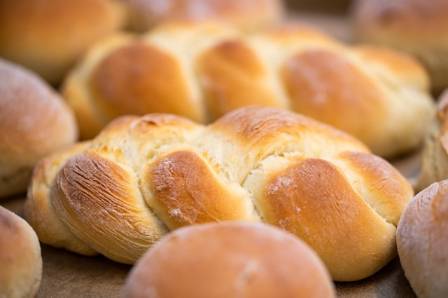
Approximately 180 calories, 6g fat (3.5g saturated), 25g carbs, 3g protein, 150mg sodium. These rolls are moderately sweet, with a tender crumb—ideal for pairing with soups, salads, or as a base for sliders. For a lighter option, use low-fat milk and reduce sugar by 1 tablespoon (though this may slightly affect yeast activation).