विशेष लेख
Most Advanced Humanoid Robots in the World
Humans have long been fascinated by the idea of creating machines in our own likeness. From the tales of ancient Greece, where Hephaestus forged golden mechanical helpers, to Renaissance automata, and modern science fiction androids, we’ve imagined humanoid beings capable of moving, thinking, and perhaps even feeling like humans.
Sebastian Vale
लेखक
लेख परिचय
नीचे पूरा लेख पढ़ें।
अनुभाग
समाचार
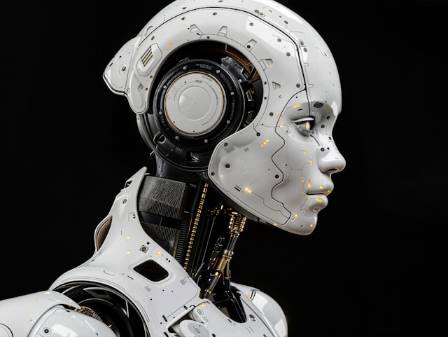
Humans have long been fascinated by the idea of creating machines in our own likeness. From the tales of ancient Greece, where Hephaestus forged golden mechanical helpers, to Renaissance automata, and modern science fiction androids, we’ve imagined humanoid beings capable of moving, thinking, and perhaps even feeling like humans.
Today, that vision is becoming reality in laboratories and workshops worldwide. Humanoid robots — machines designed to imitate human bodies and increasingly emulate human behavior — are no longer imaginary. They can walk, run, talk, make eye contact, and even work alongside people.
This pursuit is more than engineering; it’s also a mirror to ourselves. By designing robots that resemble us, we examine human abilities, social interactions, and ethical boundaries.
Here are ten of the most advanced humanoid robots globally, ranked not by a single metric of “best,” but by their pioneering impact and unique contributions.
1. Atlas — The Agile Athlete of Robotics
When it comes to raw physical ability, few robots can match Atlas, created by Boston Dynamics. Standing about 1.5 meters tall and weighing 89 kilograms, Atlas is powered hydraulically for balance, mobility, and agility.
Though its “head” is a sensor array rather than a human face, its movements are remarkably lifelike. Atlas can sprint over uneven terrain, jump between platforms, execute backflips, and perform coordinated parkour routines.
Equipped with stereo vision, LIDAR, and advanced perception software, Atlas navigates changing environments. This makes it ideal for disaster response, such as entering collapsed buildings to deliver supplies or locate survivors without endangering humans.
The robot’s fluid motion is striking: each joint is precisely controlled, and its algorithms continuously adjust balance in real time. Watching Atlas leap or spin can make it feel more like a human athlete than a machine.
2. Sophia — The Human Face of AI
Unlike Atlas, Sophia, developed by Hanson Robotics, impresses with her social presence. Launched in 2016, Sophia became a global sensation, appearing on TV, speaking at conferences, and even receiving honorary citizenship from Saudi Arabia.
Her most notable feature is her “Frubber” face, which mimics human skin’s elasticity and texture. Beneath the surface, actuators allow over 60 facial expressions, from smiles to skeptical looks, creating a convincing human-like appearance.
Sophia’s AI combines scripted dialogue, machine learning, and natural language processing. She can converse on topics from climate change to art, adjusting tone and expression to match the conversation.
Hanson Robotics aims for applications in elder care, education, and customer service, where Sophia could provide companionship, monitor health, or assist in emergencies.
3. Ameca — The Expression Expert
Engineered Arts’ Ameca is celebrated as one of the most lifelike humanoid robots — not for movement, but for facial realism. Her head and upper torso, covered in soft silicone, feature actuators that produce subtle micro-expressions: raising an eyebrow, widening eyes, or pursing lips with extraordinary detail.
Ameca can track your gaze, lean forward, and react as if truly engaged, making her an ideal platform for studying human-robot interaction. While she does not walk yet, Engineered Arts plans to add mobility.
Potential uses include customer service, education, and public engagement, where her expressive reactions could enrich human experiences.
4. Asimo — The Trailblazing Walker
Long before Atlas and Ameca, Honda’s Asimo (Advanced Step in Innovative Mobility), unveiled in 2000, demonstrated the potential of bipedal robots. At 1.3 meters tall and 48 kilograms, Asimo could climb stairs, turn smoothly, kick a ball, recognize faces, follow voice commands, and carry objects.
Honda designed Asimo as a helper for the elderly and disabled, performing simple household tasks. Retired in 2018, Asimo’s innovations in balance and motion algorithms laid the foundation for today’s humanoid robots.
5. Digit — The Practical Worker
Agility Robotics developed Digit with functionality in mind. At 1.75 meters tall, its long legs allow it to navigate human environments while carrying loads up to 18 kilograms.
Digit can climb stairs, step over curbs, and move through cluttered spaces. Ford has tested Digit for last-mile deliveries, pairing it with autonomous vehicles to carry packages directly to homes.
Its AI and sensors enable semi-autonomous operation, detecting obstacles in real time. Its design prioritizes efficiency over human-like appearance.
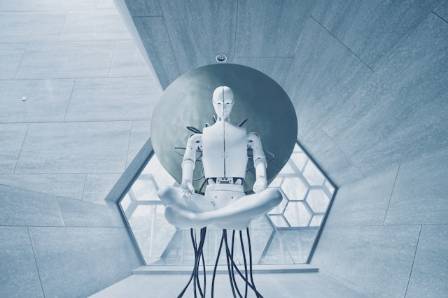
6. Robonaut 2 — The Space Assistant
NASA and General Motors created Robonaut 2 (R2) to assist in extreme environments like space. Though it lacks legs, its upper body is designed to use the same tools as astronauts.
In 2011, R2 was tested on the International Space Station, performing maintenance tasks that freed human crew for complex missions. Future versions could work on the Moon or Mars, handling hazardous or repetitive tasks to reduce risks for astronauts.
7. Nadine — The Social Companion
Developed at Nanyang Technological University in Singapore, Nadine is highly human-like, with realistic skin, hair, and approachable facial features.
Her AI allows her to remember people, recall conversations, speak multiple languages, and display emotions. Nadine could serve as a companion for the elderly, providing reminders, entertainment, and connection to emergency services.
8. Walker X — The Domestic Helper
UBTECH Robotics’ Walker X is a bipedal humanoid built for household tasks. Standing 1.45 meters tall, it can walk, climb stairs, and navigate rooms while avoiding obstacles.
Walker X can carry trays, open doors, water plants, and play simple games. Its AI enables it to recognize objects and people, offering personalized assistance integrated with smart home systems.
9. HRP-5P — The Industrial Builder
Japan’s Advanced Industrial Science and Technology created HRP-5P for construction tasks. At 1.82 meters tall, its strong arms can manipulate tools and heavy panels in hazardous or challenging environments.
HRP-5P can drill, saw, and position materials with precision, helping address labor shortages and maintain industrial productivity.
10. Tesla Optimus — The Ambitious Newcomer
Announced in 2021 by Elon Musk, Tesla’s Optimus is designed as a general-purpose humanoid. At 1.73 meters tall and 57 kilograms, it aims to perform everyday tasks, from household chores to factory work.
Optimus integrates Tesla’s autonomous AI for perception and navigation. While still in early prototypes, the goal is a robot accessible to the masses, potentially transforming labor and work environments worldwide.
Humanoid robots are no longer science fiction. From athletic robots like Atlas to socially expressive machines like Sophia and Ameca, these innovations explore both technological frontiers and human identity. As development continues, humanoid robots may soon become indispensable partners in work, care, and daily life.
यह भी पढ़ें

हमारे टॉप 5 हॉट डॉग रेसिपी
मयंक

Expert Techniques for Deer Portraits: A Comprehensive Guide to Wildlife Art
Matthew Taylor

दुनिया की सबसे पतली स्काईस्क्रेपर: स्टाइनवे टावर
सुष्मा

Snow Place Like Home: Winter Landscapes in Prints
Eleanor Whitmore

आवश्यक आधुनिक सुपरकारें: दुनिया के सर्वश्रेष्ठ प्रदर्शन वाहनों के लिए एक मार्गदर्शिका
माला बंसल

9 Fascinating Facts About Blue-Footed Boobies
Hannah Price