विशेष लेख
Iconic Floral Still Lifes You Need to Know
Flowers have remained one of the most beloved subjects in still life art for centuries. Different blooms often carry symbolic meanings, representing concepts such as innocence, purity, affection, beauty, vanity, or the fleeting nature of life. Some flowers remind viewers of mortality and the passage of time, while others simply celebrate the elegance of the natural world without any hidden message.
Cassandra Vale
लेखक
लेख परिचय
नीचे पूरा लेख पढ़ें।
अनुभाग
समाचार
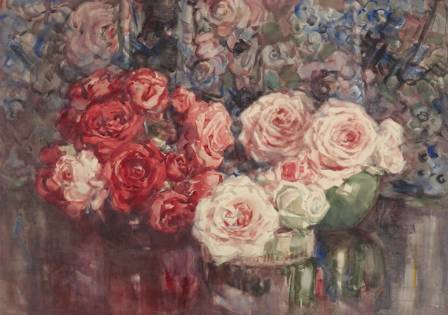
Flowers have remained one of the most beloved subjects in still life art for centuries. Different blooms often carry symbolic meanings, representing concepts such as innocence, purity, affection, beauty, vanity, or the fleeting nature of life. Some flowers remind viewers of mortality and the passage of time, while others simply celebrate the elegance of the natural world without any hidden message.
Whatever their meaning, floral still lifes have played an important role in art history. Below, we explore ten outstanding examples, ranging from Dutch masterpieces to modern interpretations, each demonstrating the timeless fascination artists have had with flowers.
1. Jan Davidsz de Heem – Vase of Flowers
Jan Davidsz de Heem created one of the most celebrated floral still lifes of the Dutch Golden Age. Unlike many carefully arranged bouquets of the seventeenth century, this composition feels energetic and abundant, with blossoms appearing to overflow from the vase.
A particularly striking detail is the reflection on the vase’s surface, where viewers can glimpse the sky outside the studio window and objects resting nearby. These subtle touches add depth and realism, showcasing De Heem’s extraordinary ability to blend observation with artistic elegance.
2. Ambrosius Bosschaert the Elder – Flower Still Life
Ambrosius Bosschaert the Elder was among the first Dutch painters to establish flower painting as an independent artistic genre. His works are known for their balanced compositions and meticulous attention to detail.
In this painting, roses and tulips are rendered with remarkable precision. Even the insects, including a butterfly and a praying mantis, appear astonishingly lifelike. Every petal and leaf reflects Bosschaert’s careful study of nature and his dedication to accuracy.
3. Rachel Ruysch – Vase with Flowers
Rachel Ruysch is widely regarded as one of the most accomplished female painters of the Dutch Golden Age. Her floral compositions are distinguished by vibrant color, dramatic lighting, and a sense of movement.
Rather than arranging flowers in perfectly symmetrical bouquets, Ruysch allowed stems to twist and blossoms to droop naturally. Combined with her dark backgrounds, these lively arrangements create a dramatic contrast that makes the flowers seem almost alive.
4. Sophia L. Crownfield – Three Studies for Poppies
Although Sophia L. Crownfield is better known for her work as a designer, she also produced beautiful botanical studies. Originally associated with decorative arts, she later expanded her artistic training and developed a versatile creative career.
Her studies of poppies demonstrate both technical skill and an appreciation for floral forms. While flower painting was not her primary focus, these works reveal her keen eye for color, shape, and natural beauty.
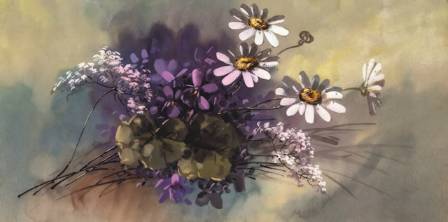
5. Claude Monet – Still Life with Flowers and Fruit
Painted in the studio, this still life nevertheless reflects Claude Monet’s fascination with light and atmosphere. The flowers, fruit, and tablecloth are handled with varied brushwork, creating a sense of movement throughout the composition.
Monet softened outlines and used changing light to connect every object within the scene. These experimental techniques would later become central elements of Impressionism and help transform modern painting.
6. Odilon Redon – Vase of Flowers
Odilon Redon began his career producing dark, dreamlike images filled with mysterious creatures and symbolic themes. Later in life, however, he embraced vibrant color and turned increasingly toward floral subjects.
His flower paintings reveal a softer and more optimistic side of his artistic vision. Rich hues and expressive forms replace the shadowy imagery of his earlier years, demonstrating the evolution of his creative style.
7. Gustave Courbet – Bouquet of Flowers in a Vase
As a leading figure of French Realism, Gustave Courbet sought to paint the world exactly as he saw it. He rejected idealized subjects and focused on direct observation.
This bouquet is a fine example of his approach. Rather than relying on symbolism, Courbet concentrated on faithfully depicting the flowers themselves. The result is a composition that feels natural, honest, and visually compelling.
8. Georgia O’Keeffe – Red Canna
Georgia O’Keeffe’s enlarged flower paintings are among the most recognizable works in American art. By magnifying floral forms, she encouraged viewers to notice details that often go overlooked.
Although some critics interpreted these paintings as symbolic representations of femininity, O’Keeffe consistently explained that her intention was much simpler: she wanted people to slow down, observe carefully, and appreciate the beauty of flowers in a deeper way.
9. Ferdinand Georg Waldmüller – Roses
Ferdinand Georg Waldmüller was a prominent Austrian painter associated with the Biedermeier period. He became known for his realistic landscapes and floral still lifes.
In Roses, every petal appears delicate and natural, while the reflective vase demonstrates exceptional technical skill. Waldmüller strongly believed in observing nature directly and often challenged the academic conventions of his time in favor of a more authentic approach.
Despite his artistic achievements, some of his works became entangled in tragic historical events during the Nazi era, when paintings were confiscated from Jewish collectors and incorporated into Hitler’s planned museum collection.
10. Fernando Botero – Flowers
Fernando Botero is famous for his distinctive style characterized by exaggerated volume and rounded forms. While most people associate him with portraits and figurative works, he also applied this visual language to still life painting.
His floral compositions feature bold shapes, rich colors, and a playful interpretation of traditional subjects. At the same time, they reflect his admiration for classical European masters, whose works greatly influenced him during his early artistic development.
Conclusion
Floral still life painting has remained relevant across centuries because it offers artists endless opportunities to explore color, light, symbolism, and form. From the precise realism of Dutch masters to the expressive interpretations of modern painters, flowers continue to inspire creativity and emotional connection.
Whether viewed as symbols of life’s fragility or simply as celebrations of natural beauty, these artworks remind us of the enduring relationship between art and nature. By taking a closer look at each blossom, petal, and brushstroke, we gain a deeper appreciation for both the flowers themselves and the artists who brought them to life.
यह भी पढ़ें
Pan Seared Garlic Butter Lamb Chops
Juliette Whitaker
शरद ऋतु की सुनहरी रोशनी को कैद करना: एक चरण-दर-चरण जलरंग अध्ययन
भावेश गोहिल
These Beautiful Creatures Are the Absolute Cutest Animals on Earth
Spencer Noah
10 Unbelievable Marathons That Sound Like Fantasy (But Are Real)
Karry
शुरुआती लोगों के लिए वॉलीबॉल: मैं खेलना कैसे शुरू करूँ?
ललित
Needle Felting Basics: Tools, Wool, and How to Begin
Magnus Ravenswood